In a nutshell
- Axelsvik, on the Kalix coast of Norrbotten, at the top of the Bothnian Bay.
- Crossing from Finland the clock goes back one hour, and forward again coming home.
- Both countries are in Schengen. Bring identification anyway, because the operator asks.
- Euro in Finland, Swedish krona on board and at the terminal.
Where the ship actually is
The cruise is marketed out of Rovaniemi, most people booking it are staying in Finnish Lapland, and the ship sails from Sweden. All three of those are true simultaneously and nothing in the booking makes a fuss about it, which is how people end up surprised on the coach.
The port is Axelsvik, on the coast of Norrbotten near Kalix, at the very top of the Bothnian Bay. The Finnish border is not far away, and the road crossing is unremarkable, which is part of why it goes unnoticed.
None of this is a problem. It is simply a set of facts with consequences, and the consequences are easier to handle if you know about them the day before rather than on the day.
The hour
This is the one that actually catches people out. Finland runs on Eastern European Time and Sweden on Central European Time, so Sweden is one hour behind. Crossing westward, the clock goes back an hour; coming home it goes forward again.
Modern phones handle this by themselves, which is both the solution and the problem, because a phone that silently rebases itself is a phone you cannot use to reason about the schedule. If the day is timed from your hotel in Rovaniemi and quoted in Finnish time, that is the clock to keep in your head.
The practical advice is simple: work out the return time in the time zone you are sleeping in, and do not book anything tight for the evening. An eight and a half hour day that finishes after dark, in winter, on winter roads, does not want a dinner reservation behind it.
Passports and the border
Finland and Sweden are both in the Schengen area and both in the European Union, so there is no routine passport control on the road between them. In normal times a coach crosses without stopping and most passengers do not notice the moment it happens.
The operator nonetheless asks you to bring a passport or an identity card, and you should. Internal Schengen checks can be reintroduced temporarily, carriers and terminals ask for identification for their own reasons, and being the one person on a coach without documents is a bad way to spend a morning.
If you are travelling from outside the EU, the usual point applies with more force: your entry conditions to Schengen cover both countries, but carry the document that proves it.
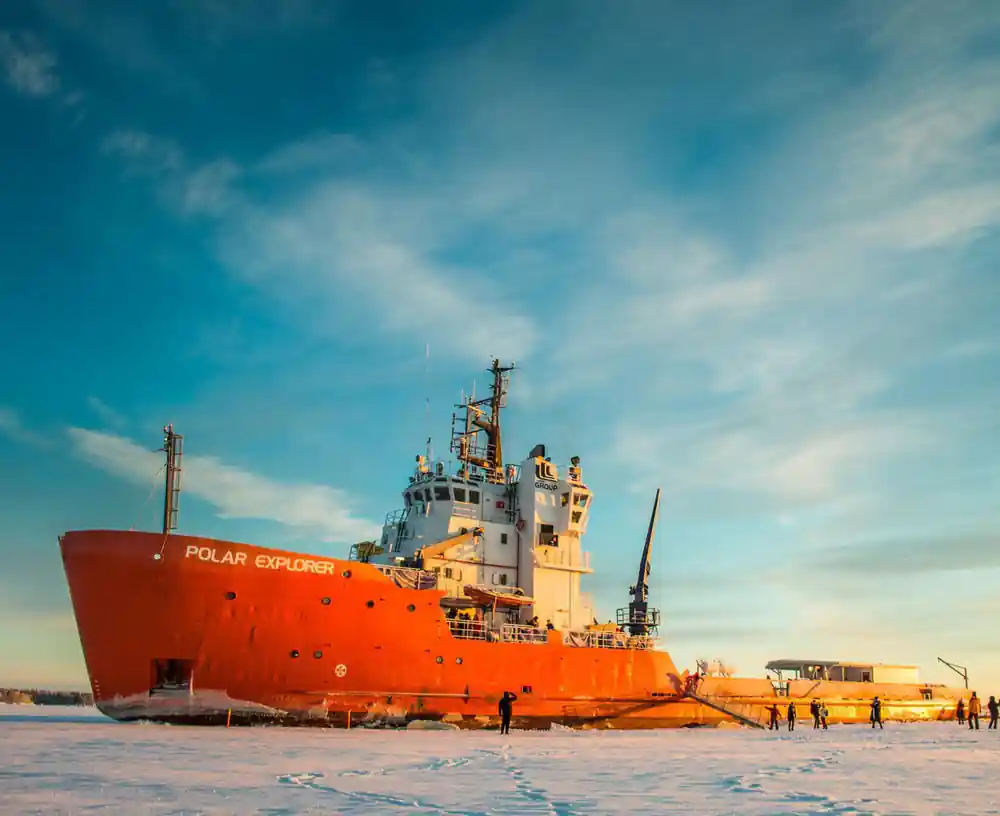
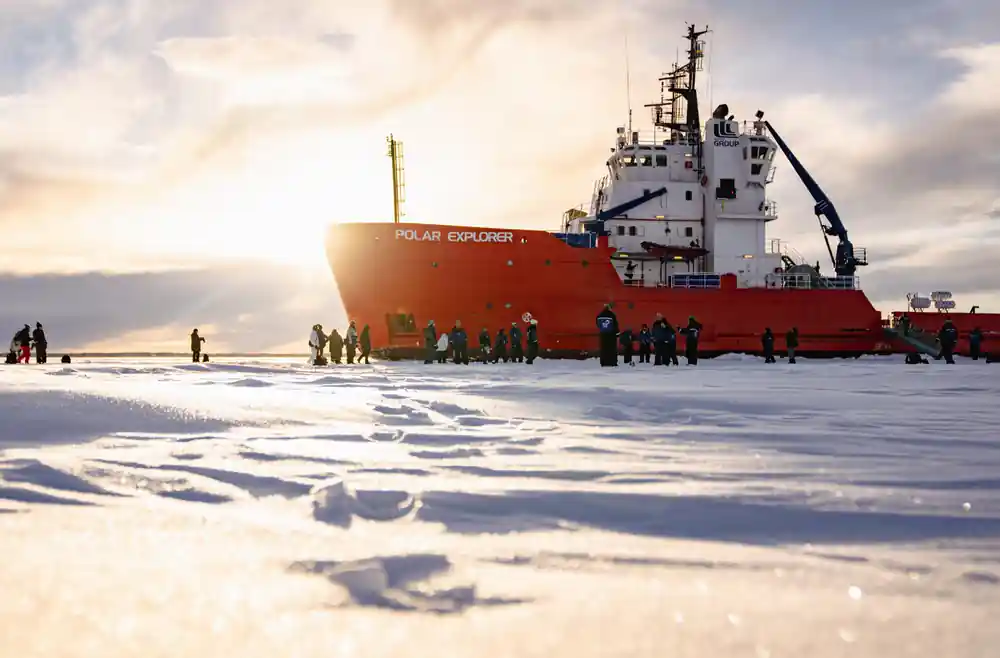
The frozen bay off the Swedish shore
Money and your phone
Finland uses the euro. Sweden does not: it uses the Swedish krona. So the cafeteria on board, and anything at the terminal, takes a currency you may not be carrying.
In practice this is barely an issue, because Sweden is one of the most card-dependent countries in the world and cash is close to unusual. A card works everywhere on this trip. What you should not do is arrive expecting to hand over euro notes, and it is worth checking whether your card charges for a currency conversion, since you will make a couple of small transactions rather than one large one.
Phones roam across the border without ceremony inside the EU, so data and calls continue as normal. If you are on a non-EU plan, the change of country is a change of network and may be a change of tariff. Worth ten seconds of checking before you leave the hotel.
Norrbotten, and what is around the port
Axelsvik sits in Norrbotten, Sweden's northernmost county, on a low forested coast broken up by a scatter of islands. It is a quiet part of a quiet region: the nearest town of any size is Kalix, and the nearest city with an airport is Luleå, further down the coast.
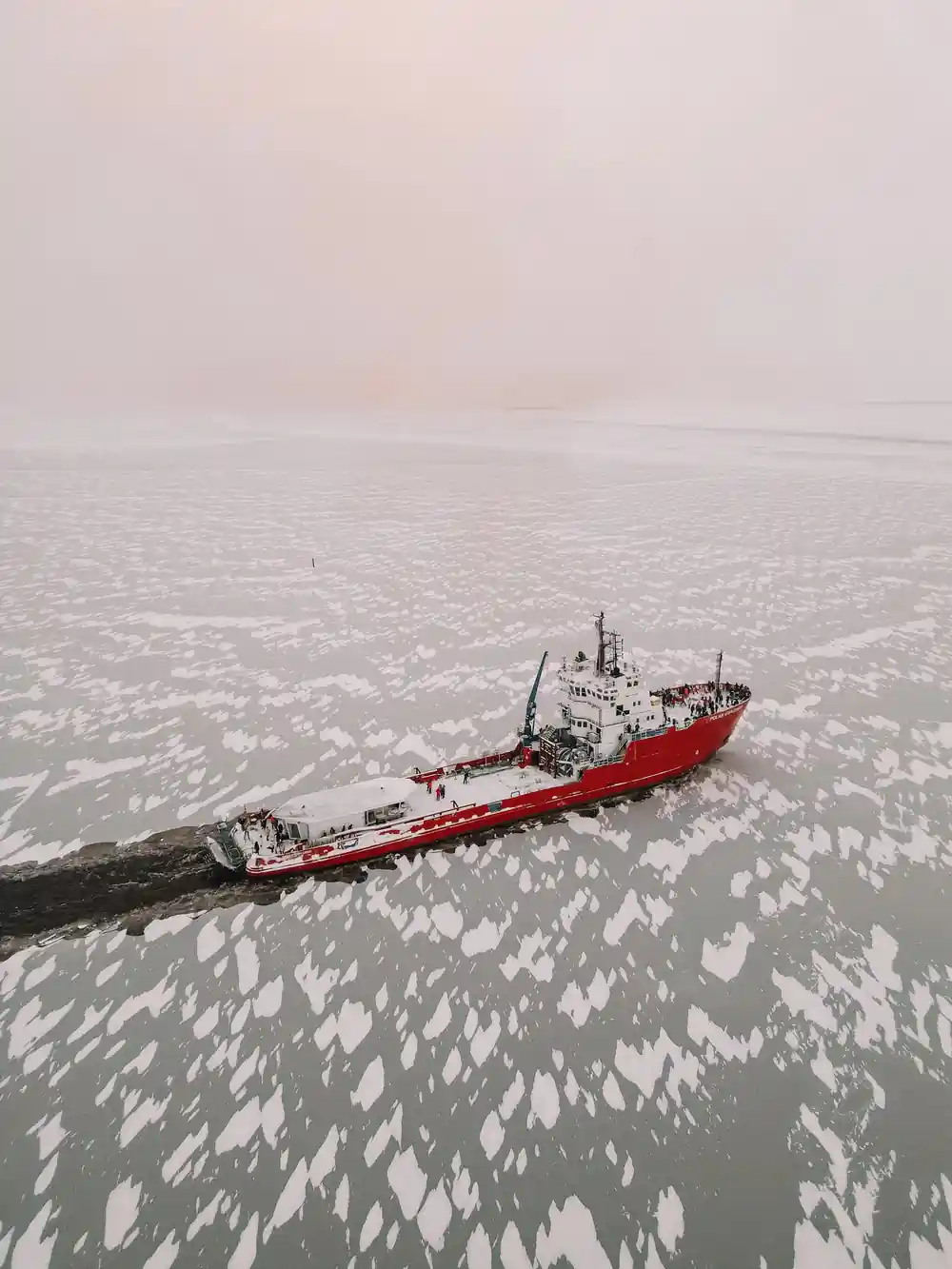
In winter the distinction between land and sea stops being obvious. The bay freezes, the islands join up, and snow covers everything at the same depth, so the coastline you can see from the deck is a line of trees rather than a line of water. People drive on some of it. That is normal here and startling if you have not seen it before.
There is not a great deal at the port itself beyond the terminal, which is the correct arrangement for a place whose entire purpose is to put people onto a ship. If you were hoping to combine the cruise with an afternoon somewhere, that is what Luleå is for, and it argues for the Swedish-side transfer rather than the Finnish one.
Why it is sold from Finland at all
The short answer is that the visitors are in Finland. Rovaniemi is the arrival airport for Lapland tourism, it has the hotel capacity, and it is where people are already standing when they decide they want to see an icebreaker. Axelsvik is a small place on a quiet coast.
The longer answer is that the Bothnian Bay does not care about the border. The ice sheet is one sheet, shared between two countries, and the port that happens to be convenient for a passenger icebreaker is on the Swedish side. Building the operation there and busing people to it is simply what the geography suggests.
It also produces one genuinely nice feature of the day, which is that you go somewhere. A great many winter excursions from Rovaniemi run within half an hour of the town. This one crosses an international border, ends up on a different sea, and brings you back. That is a real journey, and the coach ride, tedious as it is, is part of what you are buying.
Bring identification, and remember the clock
from US$375Live tour guide