In a nutshell
- The suit is a sealed immersion suit. The water does not reach your skin.
- Trapped air holds you high on your back, so it is floating rather than swimming.
- Barely salt water freezes close to zero, so that is roughly the temperature of it.
- A height rule rather than an age rule, with a parent alongside.
What the suit actually does
Almost everything people fear about this activity comes from imagining it without the suit. Swimming in water at freezing point in ordinary clothes would be genuinely dangerous, and the fear is well founded; the suit is what makes the whole thing routine.
It is an immersion suit, the type ships carry for abandoning them. One piece, sealed at the face, with integrated boots and mitts. You climb into it over what you are already wearing, the crew close it up, and from that moment the water is on the outside and you are not.
There are two consequences. The first is that you stay dry, which is the answer to the question everyone asks. The second is buoyancy: the suit traps a substantial layer of air, so you sit high on the surface with your face clear without any effort at all. That is why it is called floating rather than swimming. Swimming, in one of these, is close to impossible and completely unnecessary.
How cold it actually is
The water is close to zero degrees. It has to be, because that is what it takes for it to freeze, and there is broken ice floating in it while you are there. So the honest answer to how cold the water is: as cold as water gets.
The honest answer to how cold you feel is completely different, and this is where people are surprised. Inside the suit you feel pressure and you feel the cold arriving slowly through the material, but you do not feel water. The parts that genuinely get cold are the parts outside: your face, and your hands through the mitts if you keep them in the water.
People come out describing it as strange rather than agonising. The most common report is a kind of delighted disbelief in the first thirty seconds, when the brain has been braced for a shock that does not come.
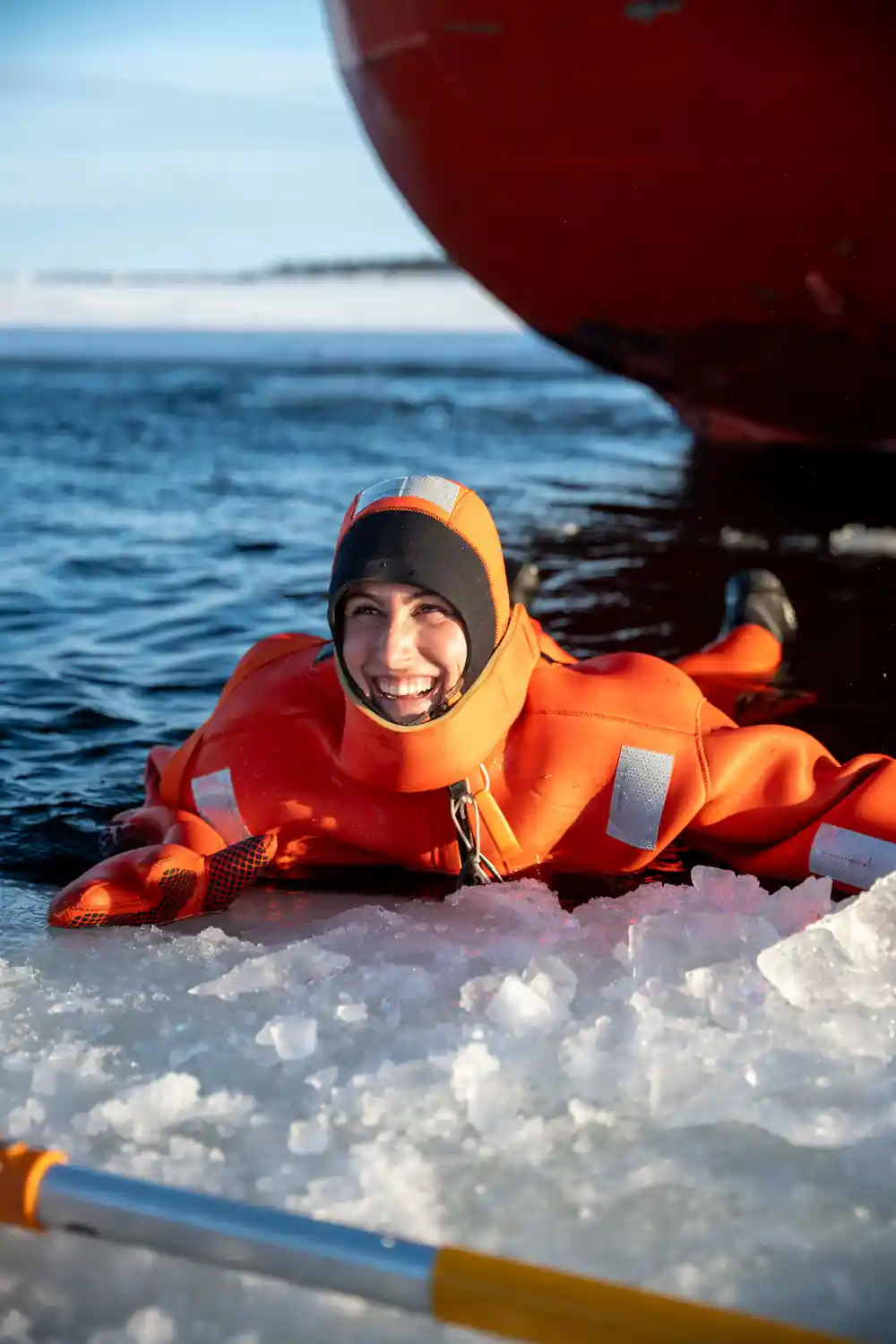
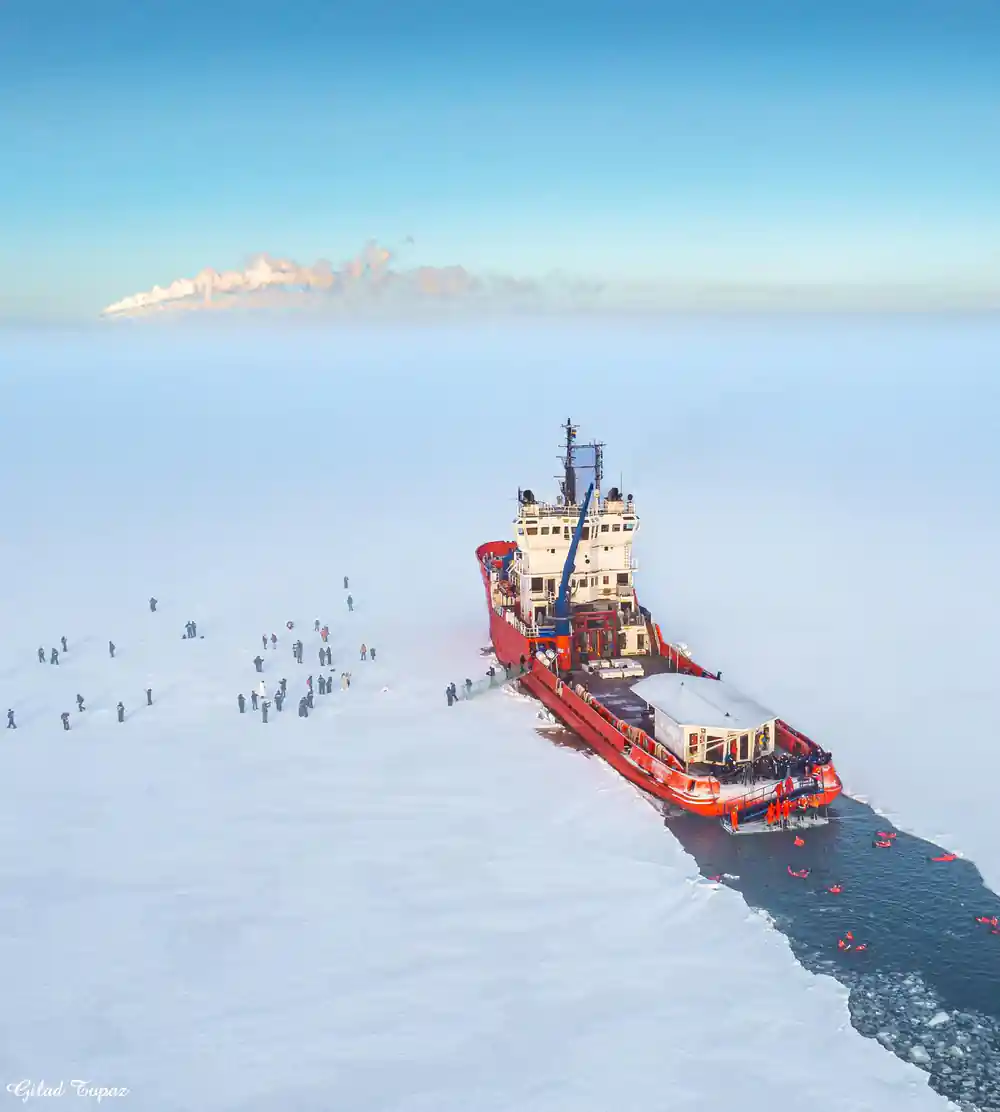
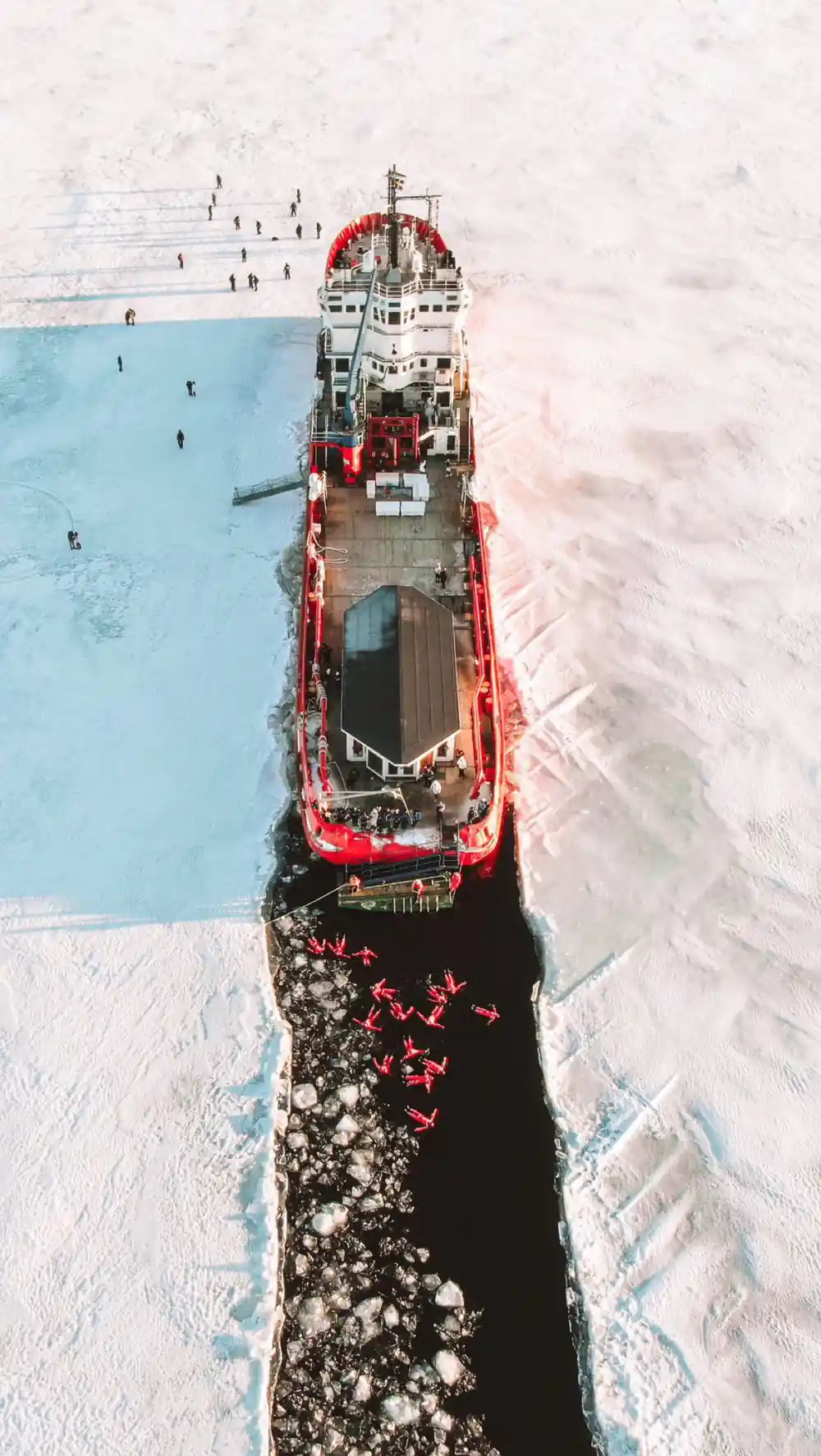
Floating on your back between the broken floes
Getting in, and how long you stay
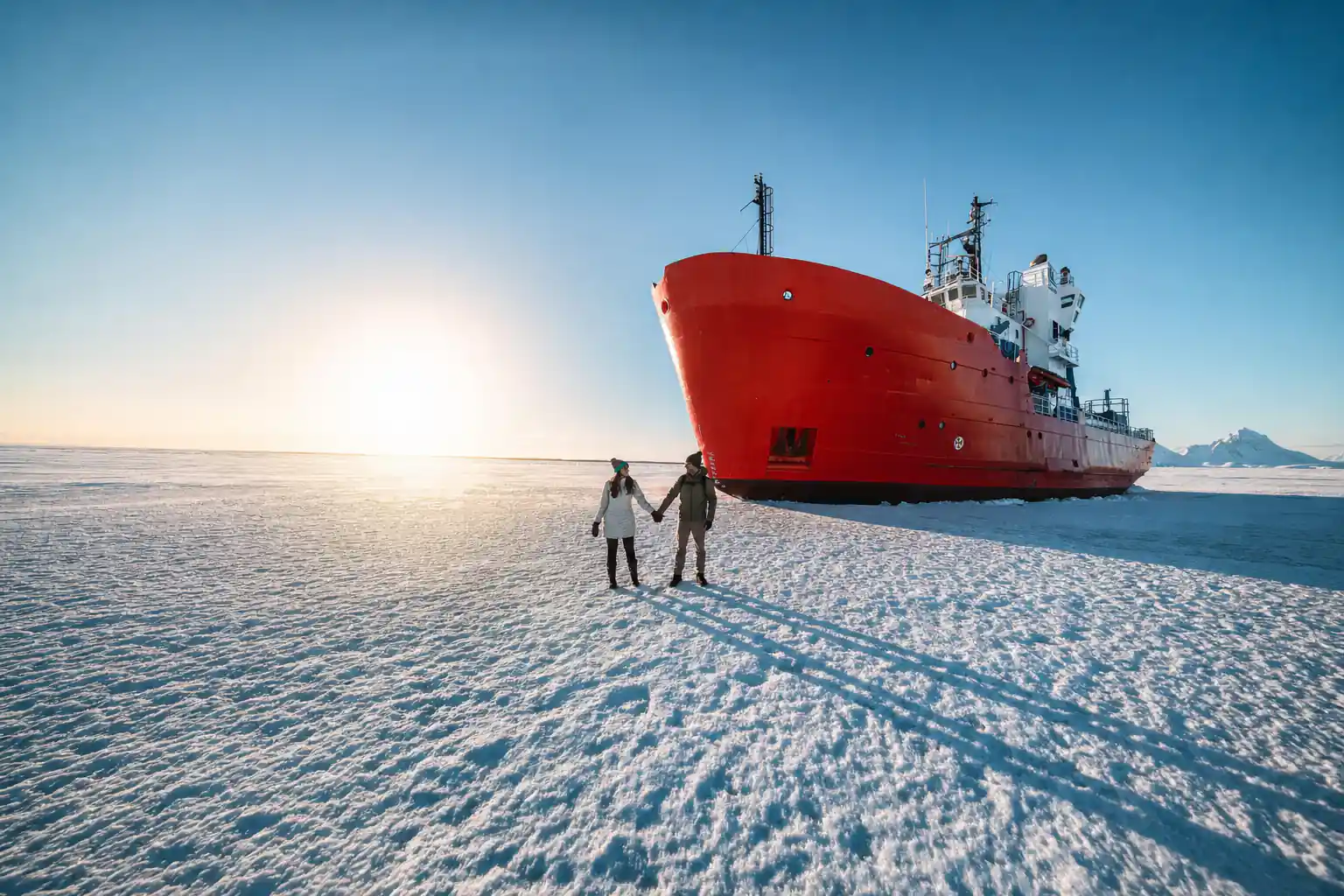
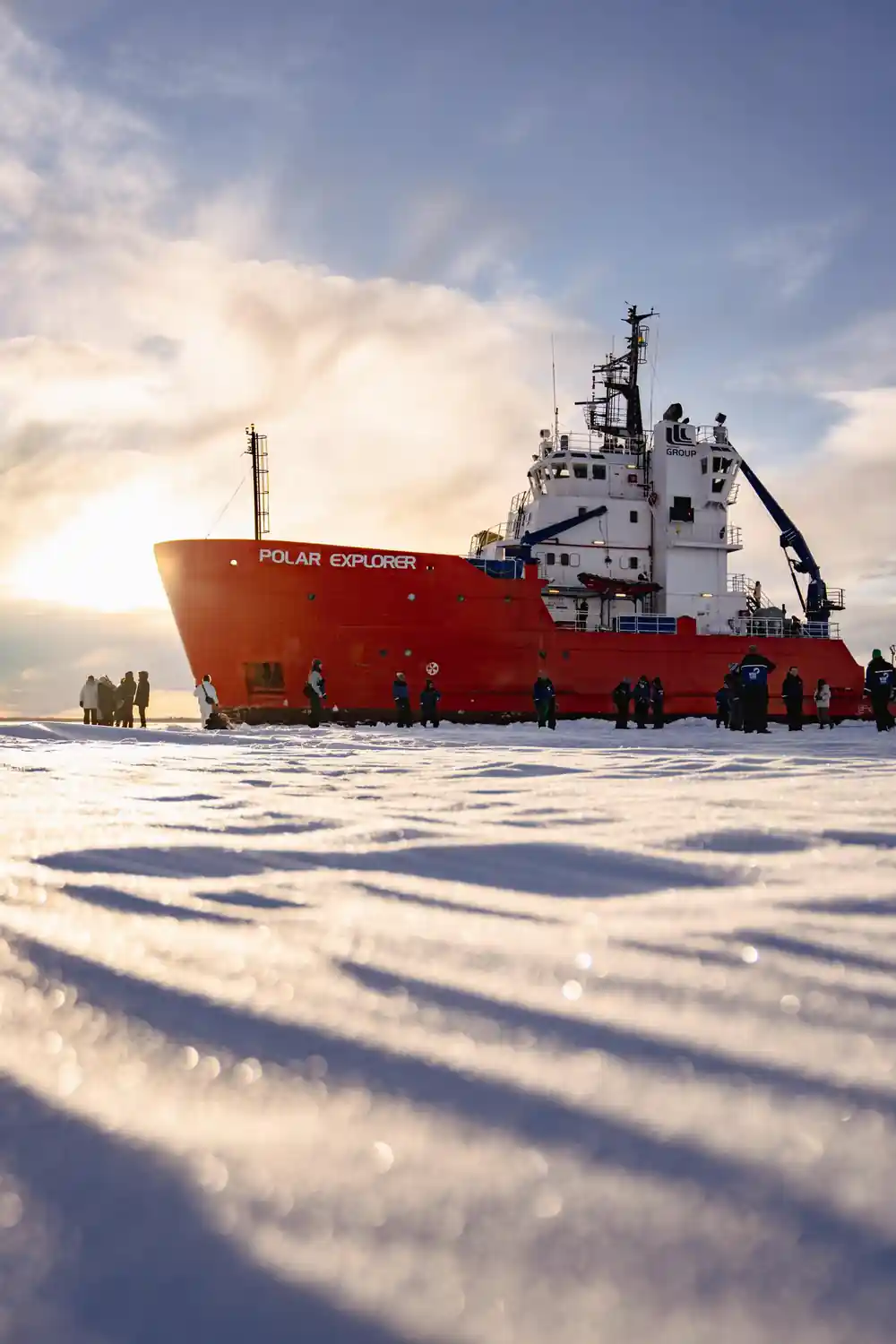
The ship stops, breaks a channel, and holds position in it. Suits are handed out and fitted, which takes a while for a whole group and is worth being patient about, because a suit closed properly is the difference between the experience described above and a wet one.
Entry is off the ice edge into the open channel. It is not a dive and it is not a plunge; you sit down and slide in, and the suit does the rest. Crew are on the ice with lines throughout, which is both a genuine safety arrangement and a reassurance.
How long you stay is largely up to you, within the window the ship allows. Some people are in for a couple of minutes, take the photograph and get out. Others lie on their backs looking at the sky for as long as they are permitted. There is no advantage in endurance and nobody is counting.
Getting out is the least dignified part of the day, since a buoyant sealed suit is not designed for climbing. Crew help, everyone laughs, and it is over.
Children, and who should think twice
The operator allows children of 125 centimetres and over to join the swim with their parents. That is a height rule, not an age rule, and it exists because the suit has to fit: an immersion suit that is too big cannot seal, and a suit that cannot seal is not doing its job.
So the thing to do before booking with a child is to measure them, in the shoes they will be wearing, and be honest about the answer. A child just under the line will be spectating from the ice, which is not a disaster but is worth knowing in advance rather than discovering at the ship.
For adults, the considerations are ordinary. Cold water immersion asks something of the cardiovascular system even inside a suit, so anyone with a heart condition should take advice rather than assume. The same applies to reduced mobility, since getting in and out is awkward by design. And if you are simply unsure, you can go out onto the ice and watch: the swim is included but it is not compulsory, and a fair number of people on any given day decide the ice is enough.
125 cm
The minimum height for a child to join the swim with a parent. It is a height rule rather than an age rule because an immersion suit has to fit in order to seal.
The certificate
At the end of the day the captain awards a cruise and swim certificate. It is a piece of paper with your name on it, and describing it in those terms undersells what it is doing.
Certificates of this kind exist all over the Arctic and most of them are tat. This one is slightly different because of what it certifies, which is not that you visited a place but that you did something. People photograph them on the deck, in groups, still in their hats, and the photographs are consistently better than the ones taken of the ship.
It also functions as the marker for the end of the day. The sailing back is quiet and warm and most people are tired; the certificate is the point at which the thing is formally over and everyone starts comparing how long they stayed in the water.
The suit is included, and so is the certificate
from US$375Live tour guide