In a nutshell
- The Bothnian Bay is the northernmost basin of the Gulf of Bothnia, itself the north arm of the Baltic.
- Rivers pour fresh water in, so the surface is a small fraction as salty as the ocean.
- Low-salinity water freezes near zero, not at nearly minus two.
- On the Kalix coast, a low forested shore scattered with islands.
Where this is
The Gulf of Bothnia is the long arm of the Baltic that runs north between Sweden and Finland. Its northern basin is the Bothnian Bay, and Axelsvik sits at the top of it, on the Swedish side, on the coast of Kalix municipality in the county of Norrbotten.
It is a low coast: forest coming down almost to the water, a shoreline broken into bays and points, and an archipelago of small islands scattered offshore. There are no cliffs and no mountains. The drama here is entirely seasonal rather than topographic.
The nearest town of any size is Kalix. The nearest city, and the nearest airport, is Luleå further down the coast. This is a quiet corner of a thinly populated region, and the reason a passenger icebreaker works here is that the sea does something remarkable every year.
Why the sea freezes
Most sea does not freeze. The Baltic as a whole is unusual, and the Bothnian Bay is the most unusual part of it, and the reason is fresh water.
A great deal of river water drains into the northern Baltic, and the connection to the open ocean at the far end is narrow and shallow, so salt water does not readily come in to replace what is diluted. Salinity therefore falls steadily as you go north. By the time you reach the Bothnian Bay the surface water is only lightly brackish, a small fraction as salty as the ocean, and closer in composition to a large lake than to a sea.
That changes everything about its winter behaviour, because dissolved salt is what suppresses freezing. Ocean water has to be chilled to nearly minus two degrees before ice will form, and the ice that does form is a slushy business that rejects salt as it grows. Water this close to fresh freezes at close to zero and forms clean, hard, load-bearing ice.
Combine that with a shallow basin, a long winter, and air temperatures that sit well below minus ten for weeks, and the bay does not merely get cold. It sets.
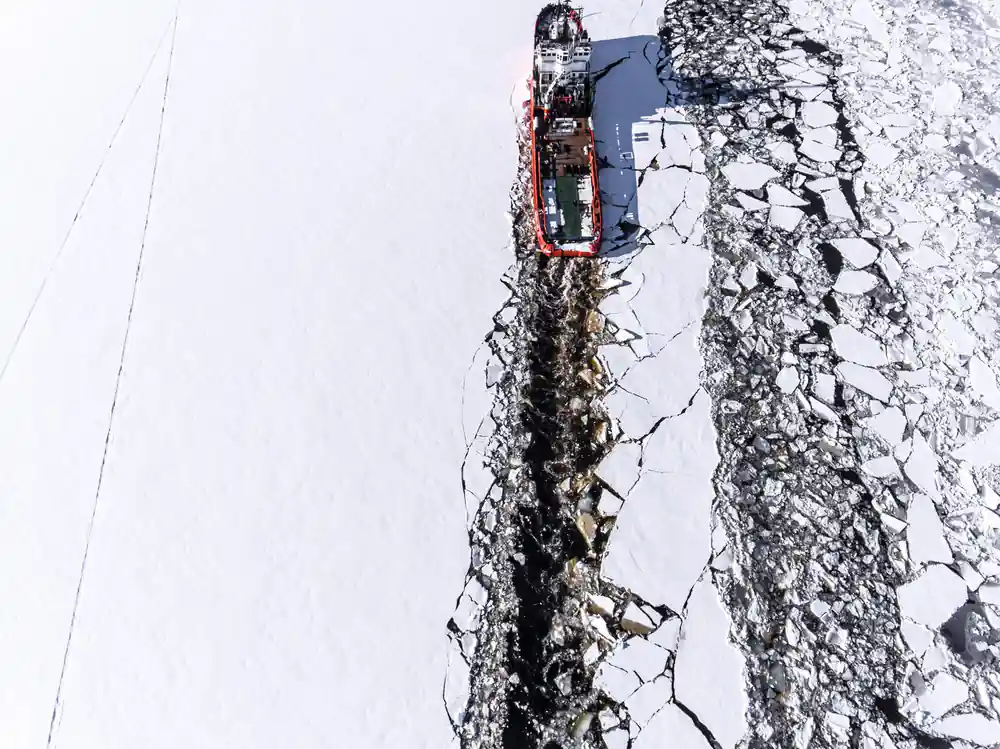
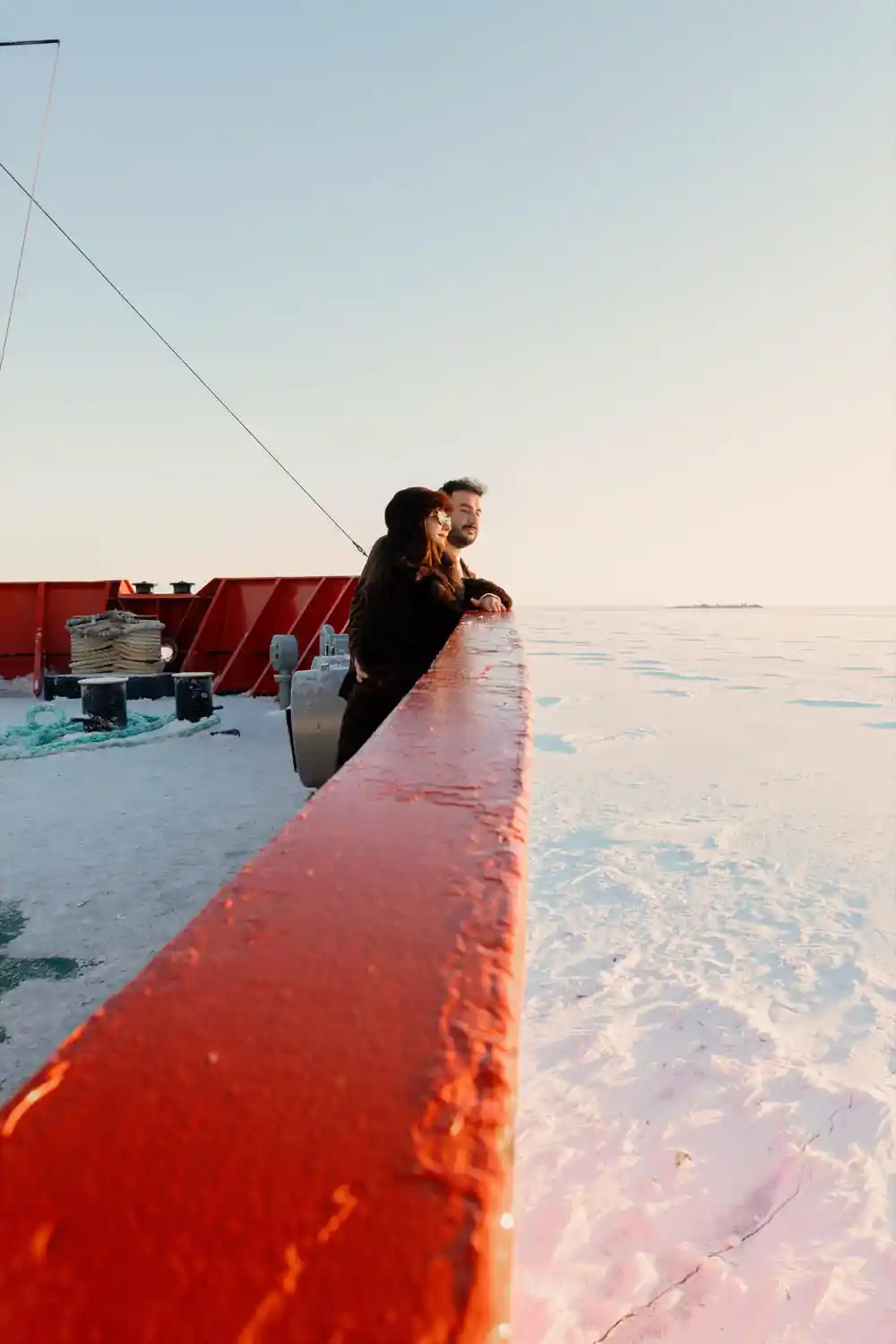
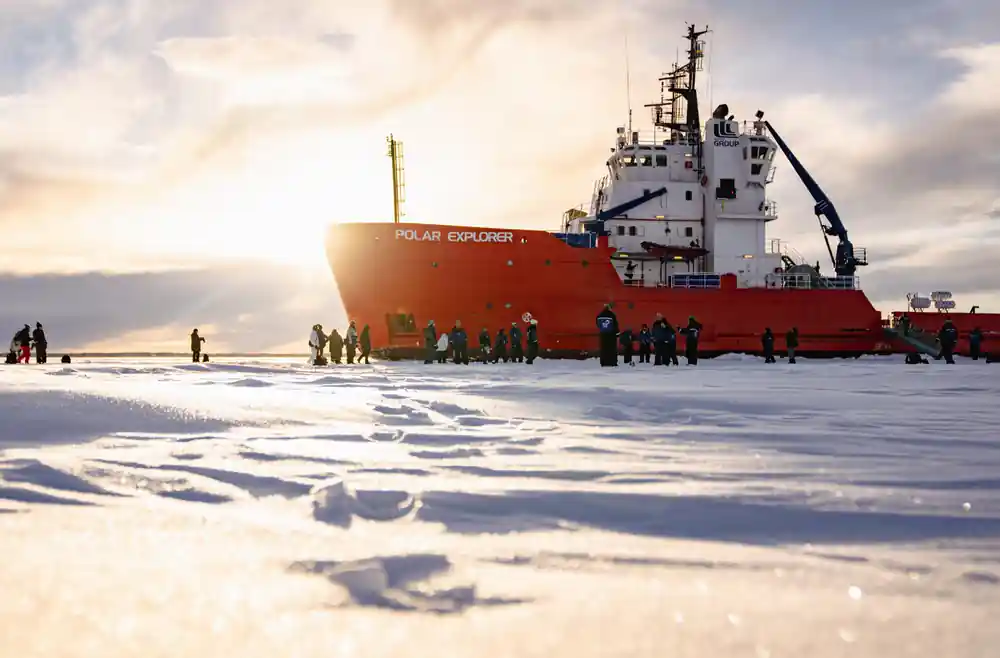
The frozen archipelago seen from the deck
What that does to the place
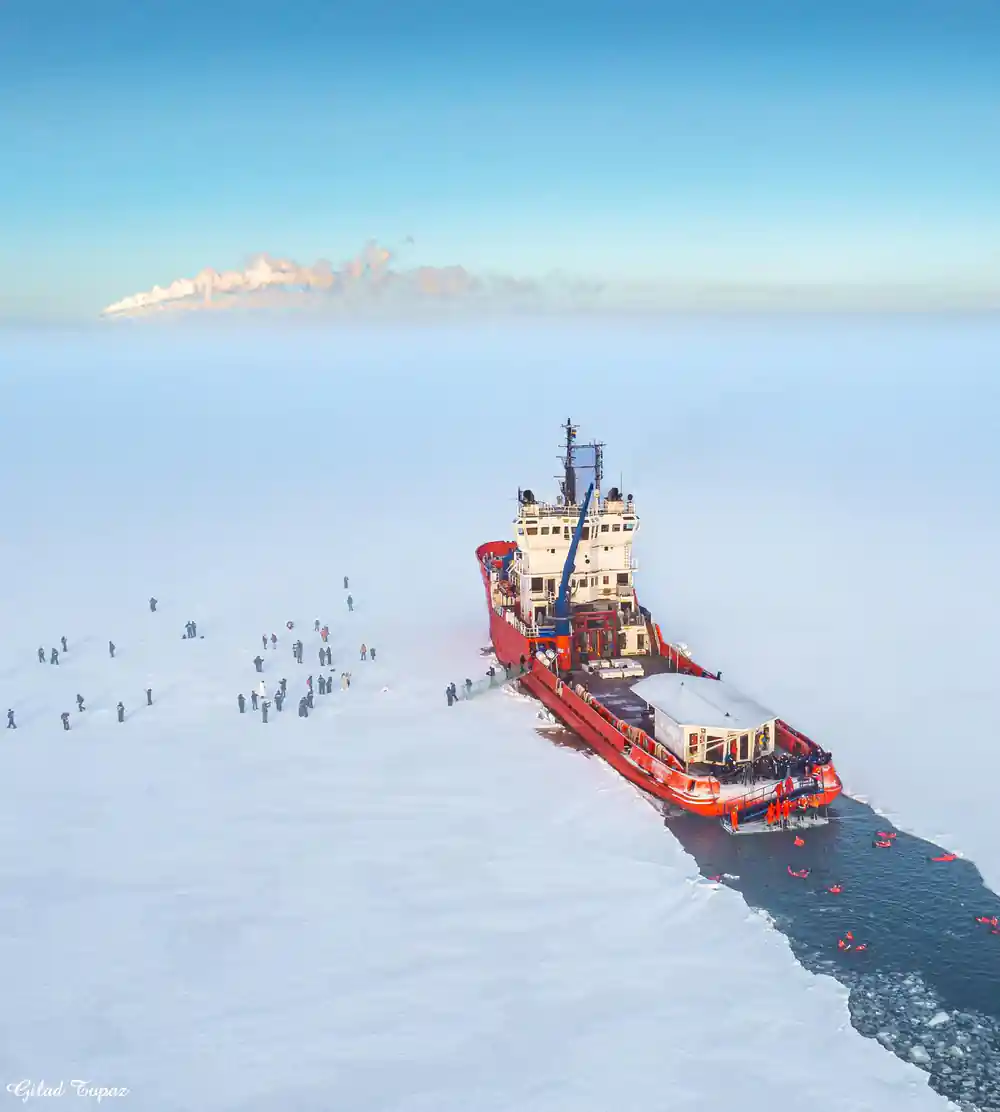
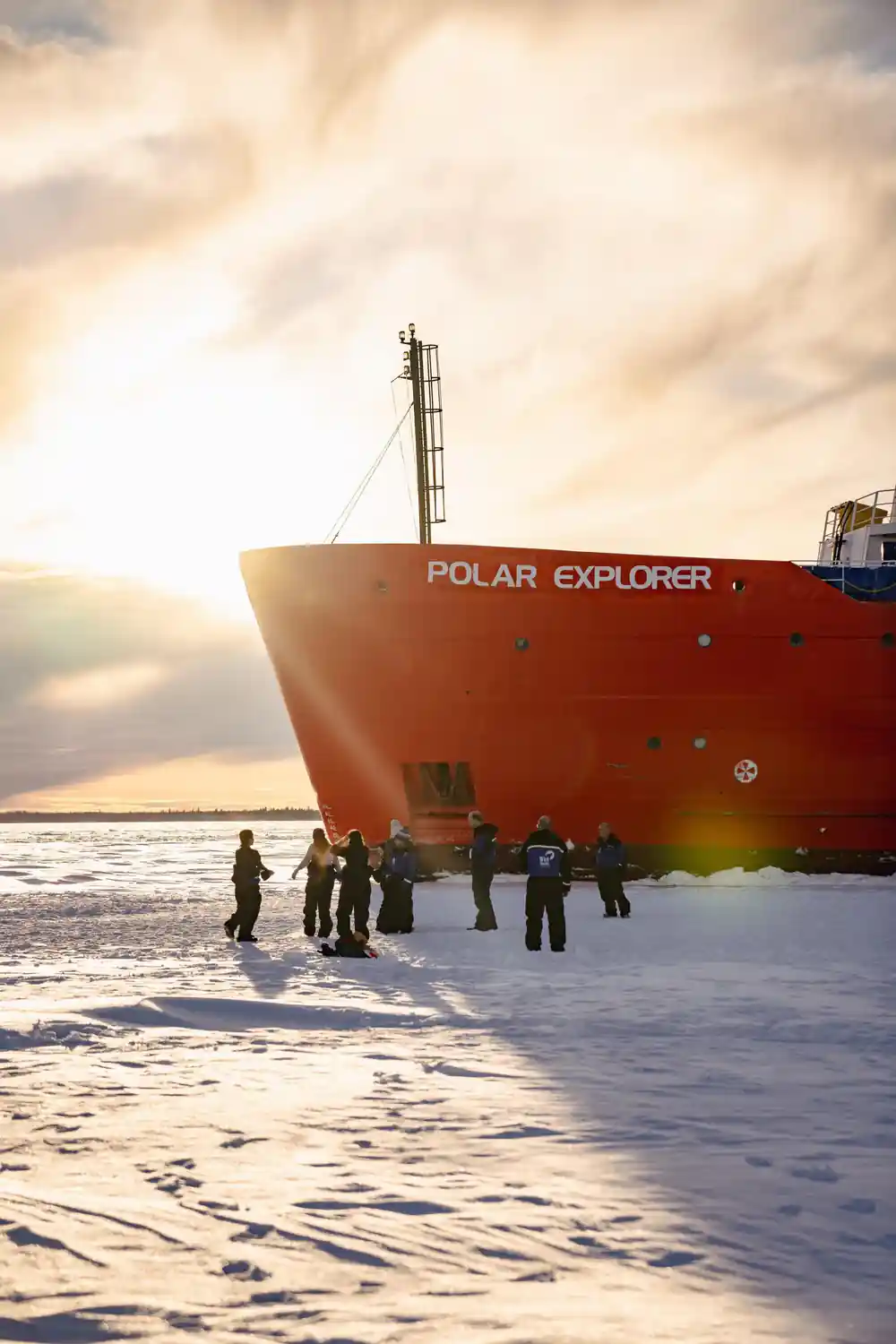
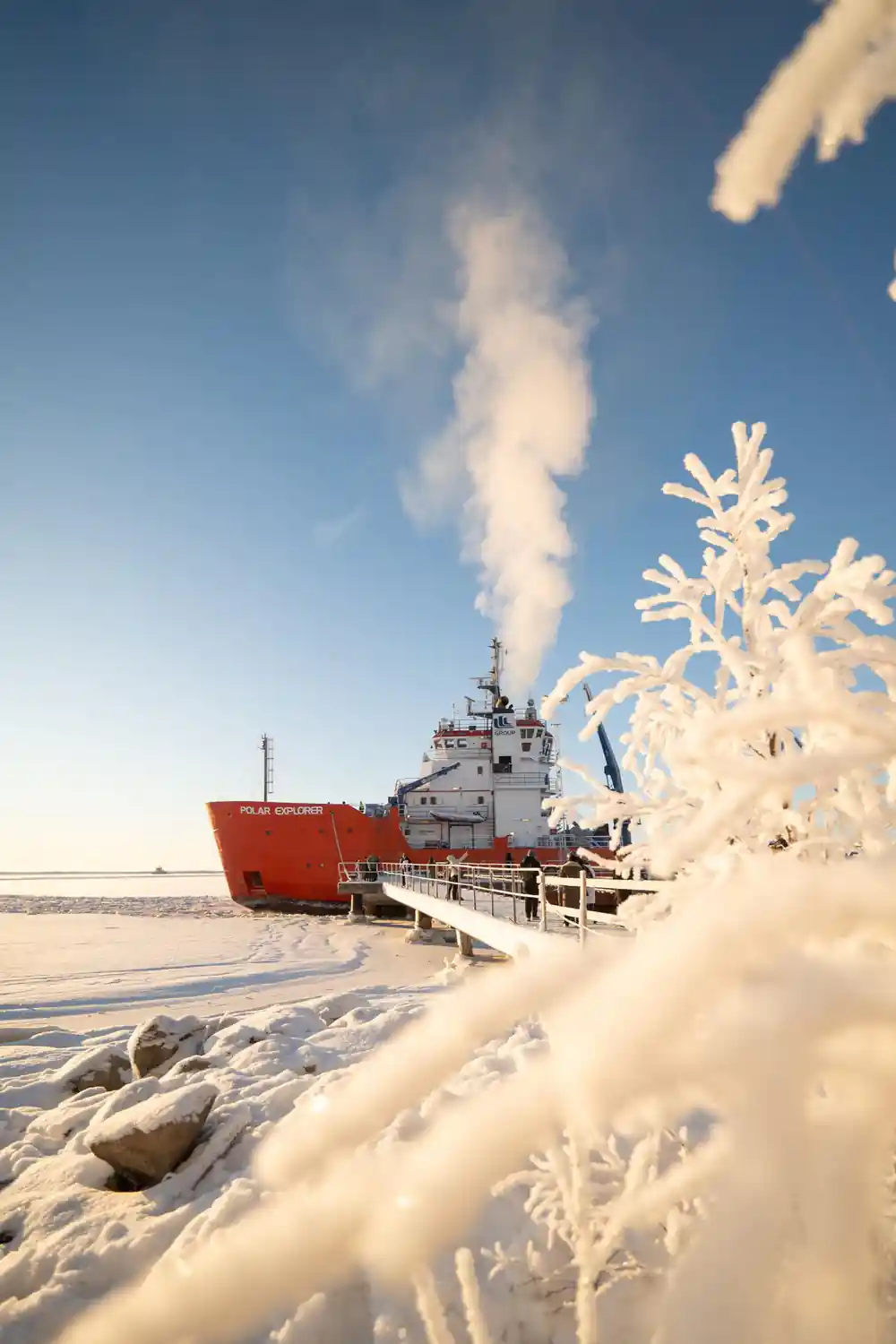
For several months of the year the coastline here stops meaning what a coastline usually means. The bay freezes, the archipelago joins up with the mainland, and snow covers land and sea to the same depth, so what you see from the deck of a ship is a continuous white plain with a line of trees at the far edge of it.
People use it. Ice roads are a normal part of northern life where the sheet is thick and the route is checked, and the sight of a car on a sea is startling exactly once. Ice fishing happens on it, and so does a great deal of ordinary walking and skiing.
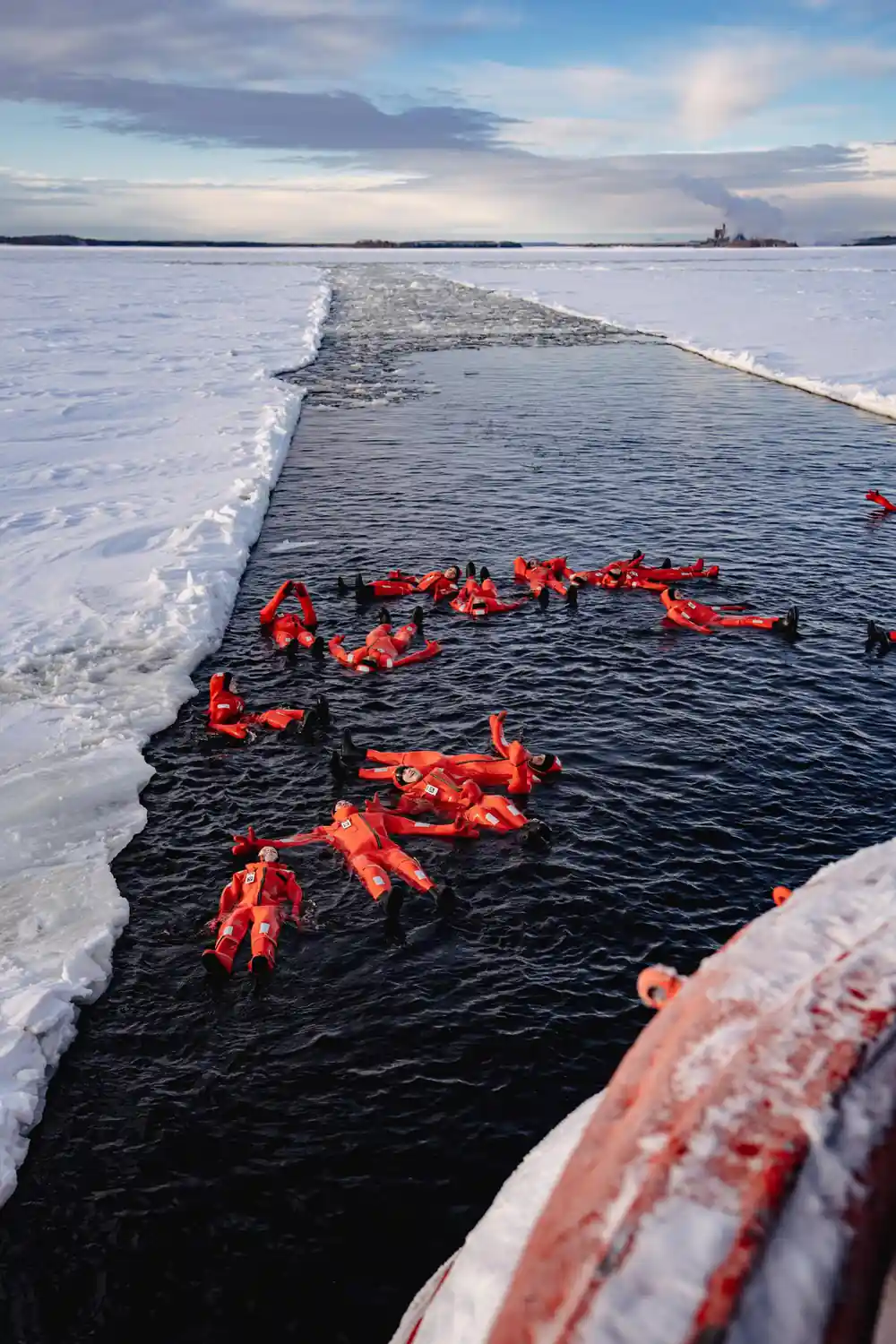
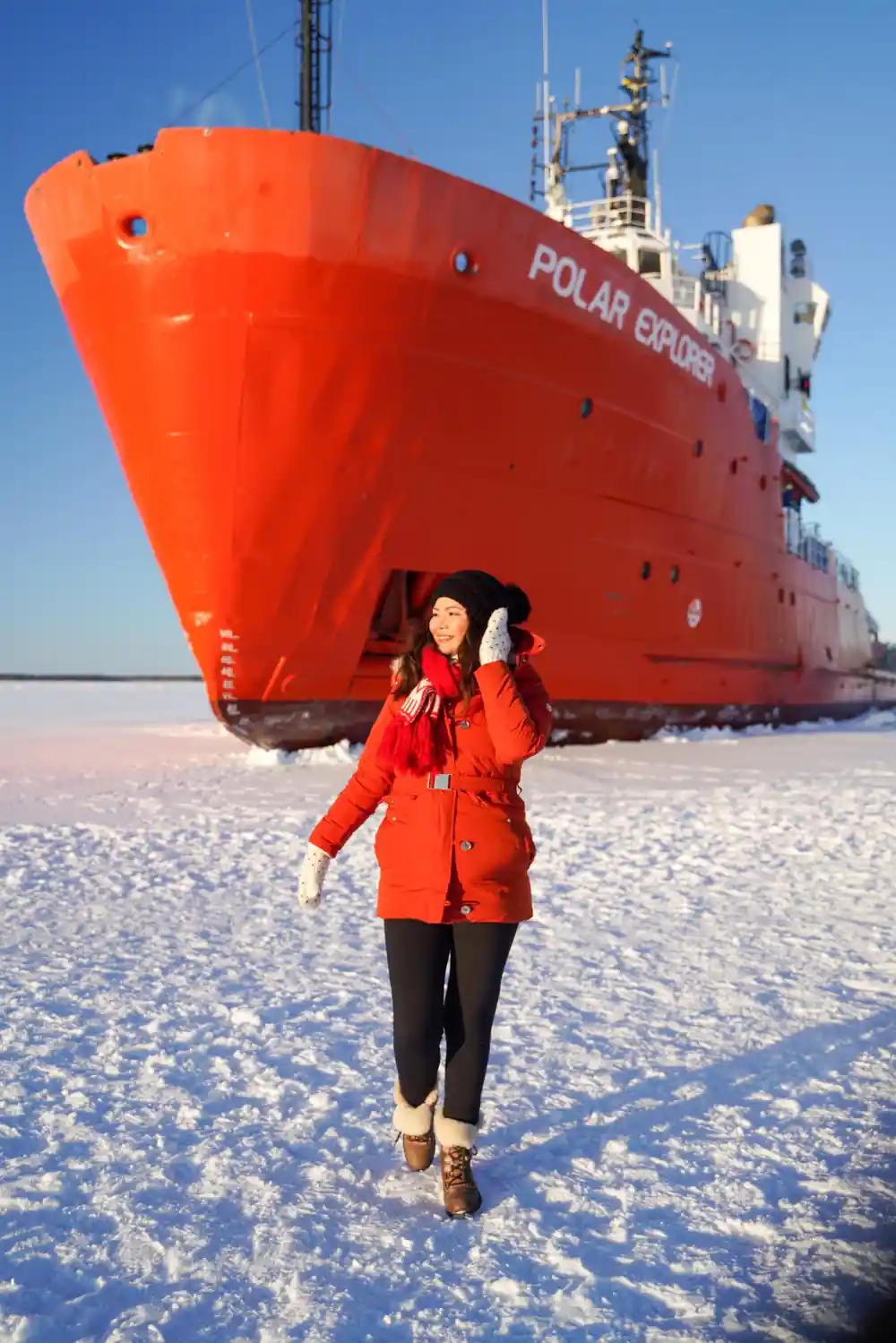
It also changes what a port is. A harbour on this coast either closes for the winter or is kept open by icebreakers, and the fact that Baltic commerce continues through the winter at all is the reason ships like the Polar Explorer exist in the first place. The passenger cruise is a use found for a capability built for something else.
What lives in a nearly fresh sea
Low salinity is hard on marine life. Most sea creatures cannot cope with water this dilute, and most freshwater ones cannot cope with any salt at all, so the Bothnian Bay ends up with a thin and rather odd list of inhabitants: a small number of marine species living at the very edge of their tolerance, alongside freshwater fish that have moved out into what is technically a sea.
The result is an ecosystem with unusually few species in it, which is not the same as an empty one. Seals live here and are adapted to the ice, hauling out on it and breeding in snow lairs on top of it. Sea birds work the open leads that icebreakers and wind keep clear.
None of this is on the itinerary and you should not book expecting wildlife. But it is worth knowing that the white plain you walk on has a functioning world underneath it, and that the ice is a habitat rather than a lid.
Barely salt
The Bothnian Bay surface is only lightly brackish, a small fraction as salty as the ocean, because so much river water drains into the northern Baltic.
What else is here
Honestly, not much at Axelsvik itself, and that is the correct answer rather than a criticism. It is a place with a terminal and a ship, and its purpose is to put one into the other.
The wider region is a different matter. Norrbotten in winter is the full northern package: snow from November, the aurora on clear nights, and the sort of silence that people travel a long way for. Luleå has an old church town at Gammelstad and the ordinary pleasures of a northern city. Further inland the country rises towards the mountains and the national parks.
But if you are coming for the day from Rovaniemi, none of that is available to you, because the schedule is a coach, a ship and a coach. Treat the cruise as the thing you came for. Axelsvik is a doorway rather than a destination, and the destination is the frozen sea beyond it.
A sea that sets solid, every winter
from US$375Live tour guide