In a nutshell
- Thickness is not guaranteed before early January, and the sheet keeps building after that.
- Around the solstice the sun barely clears the horizon at this latitude.
- January averages about minus seven by day and minus fifteen at night at Rovaniemi.
- Thick ice, and the light coming back fast.
The three things a month decides
Picking a month for this trip is not really about comfort. The cold is manageable in every month the cruise runs, because you are dressed for it and most of the day is indoors or in a suit. What the month decides is three other things: whether you can walk on the sea, how much light you get, and what the ice looks like.
Those three do not all point the same way, which is why there is a decision to make at all. The darkest month has the most atmosphere and the least reliable ice. The brightest end of the season has the best ice and none of the midwinter strangeness. Where you land between them depends on what you actually want.
The ice
The sheet builds through the winter, and the operator does not guarantee its thickness before early January. So December is the month with the most uncertainty attached to the ice walk, and every month after it is progressively safer.
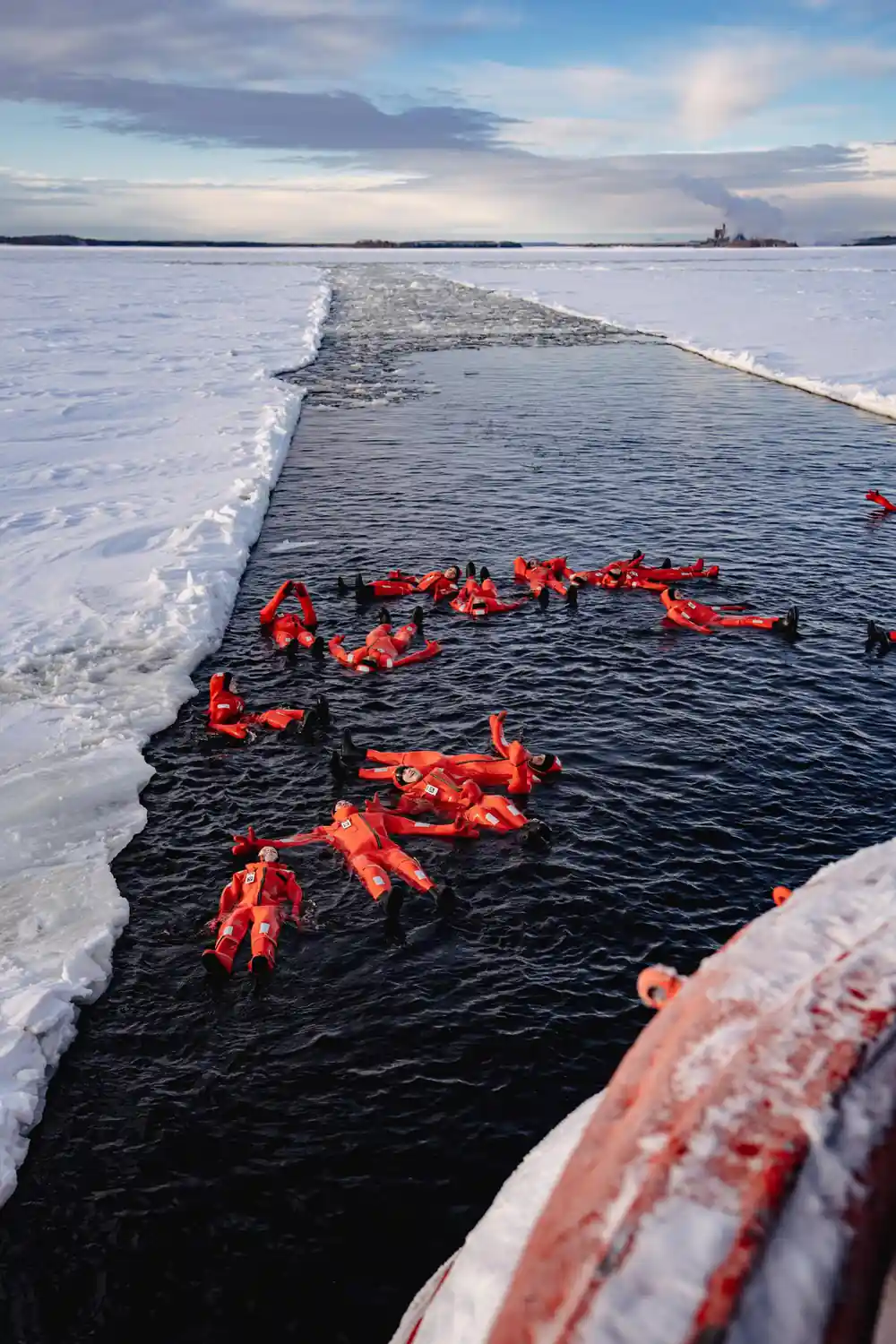
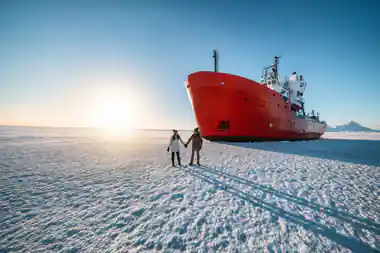
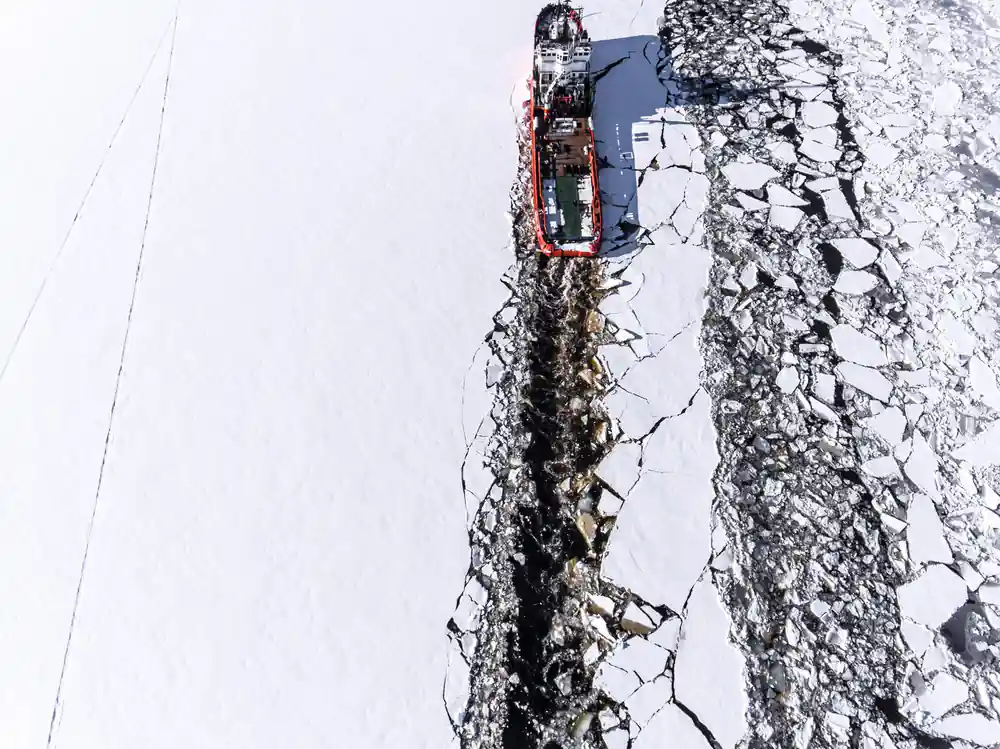
The cruise itself is not in question. An icebreaker in a bay with thin ice is still an icebreaker breaking ice, and the swim happens in the channel it makes. What changes is whether several dozen people can be let out to stand on the sheet.
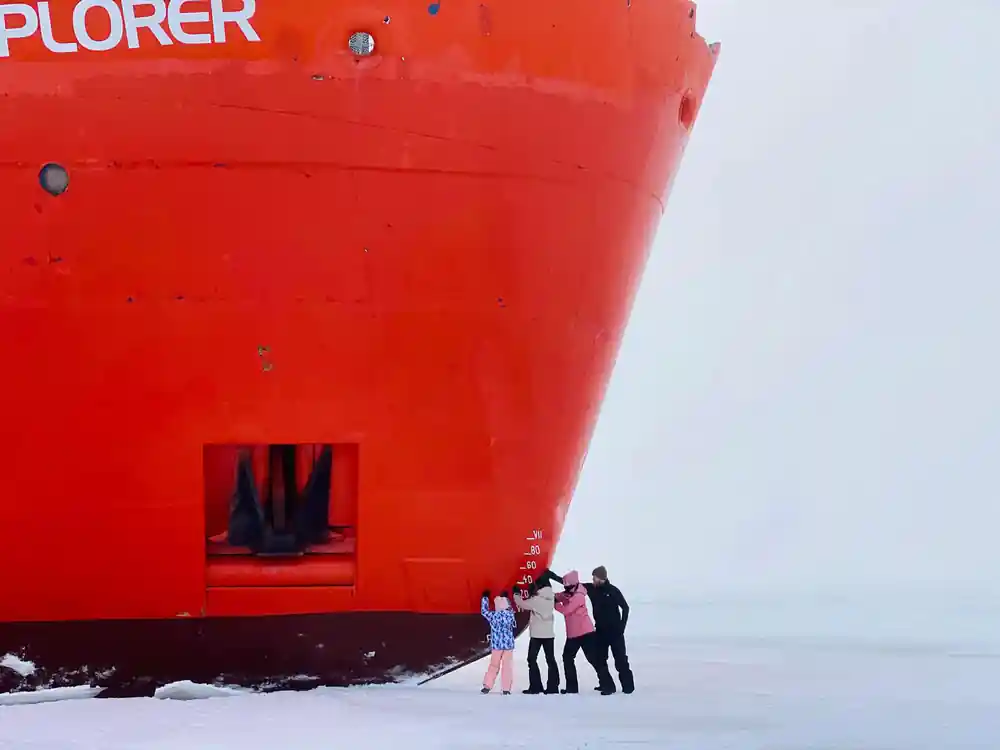
By February the ice in this bay is thick, and by March it is at its maximum for the year before the melt starts. If the walk is the reason you are booking, the second half of the season removes the doubt.
The light, which surprises people
Rovaniemi sits essentially on the Arctic Circle, and the consequence around midwinter is severe. In December the sun clears the horizon for barely an hour, and in some definitions not at all; what you actually get is a long blue twilight either side of a brief low sun.
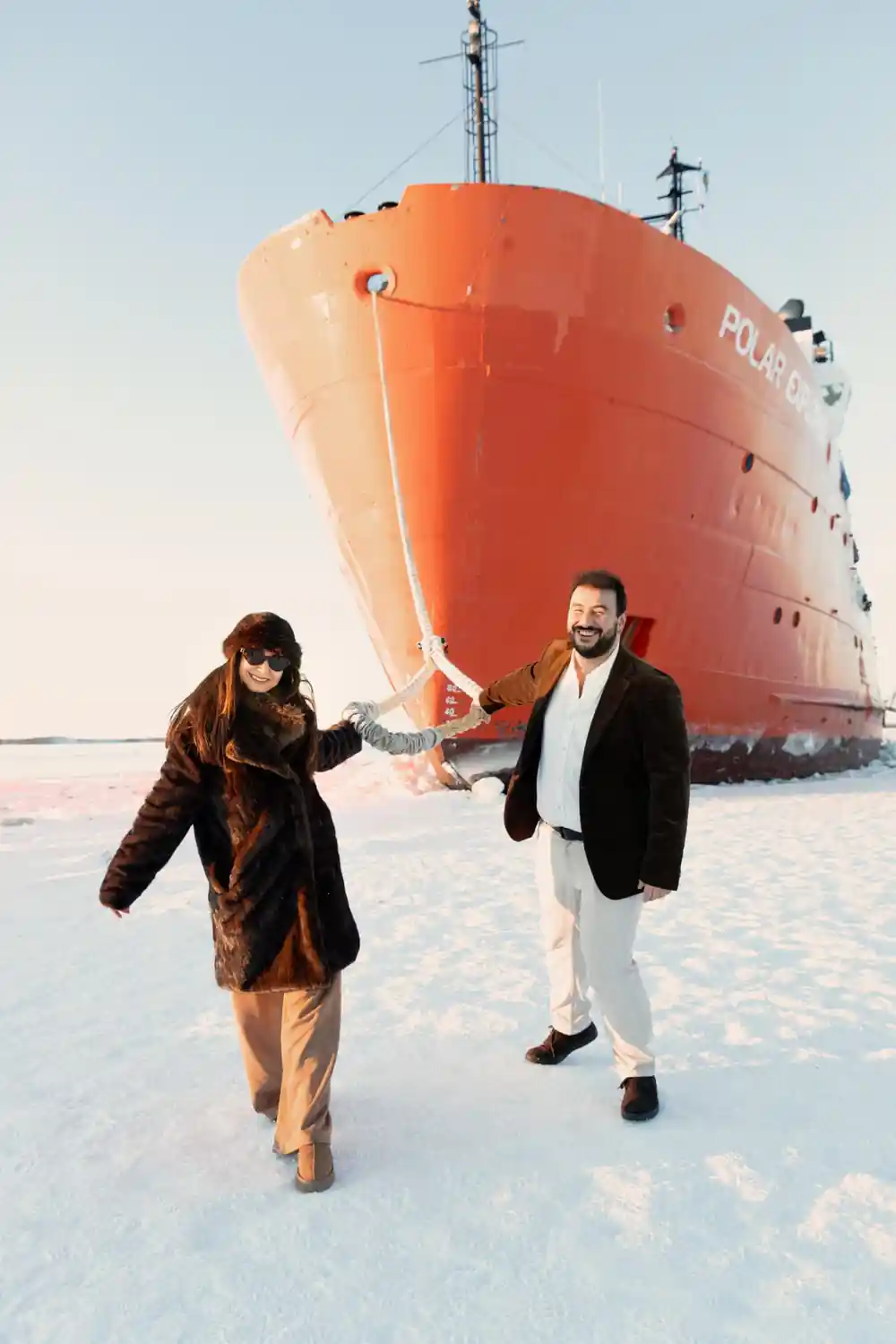
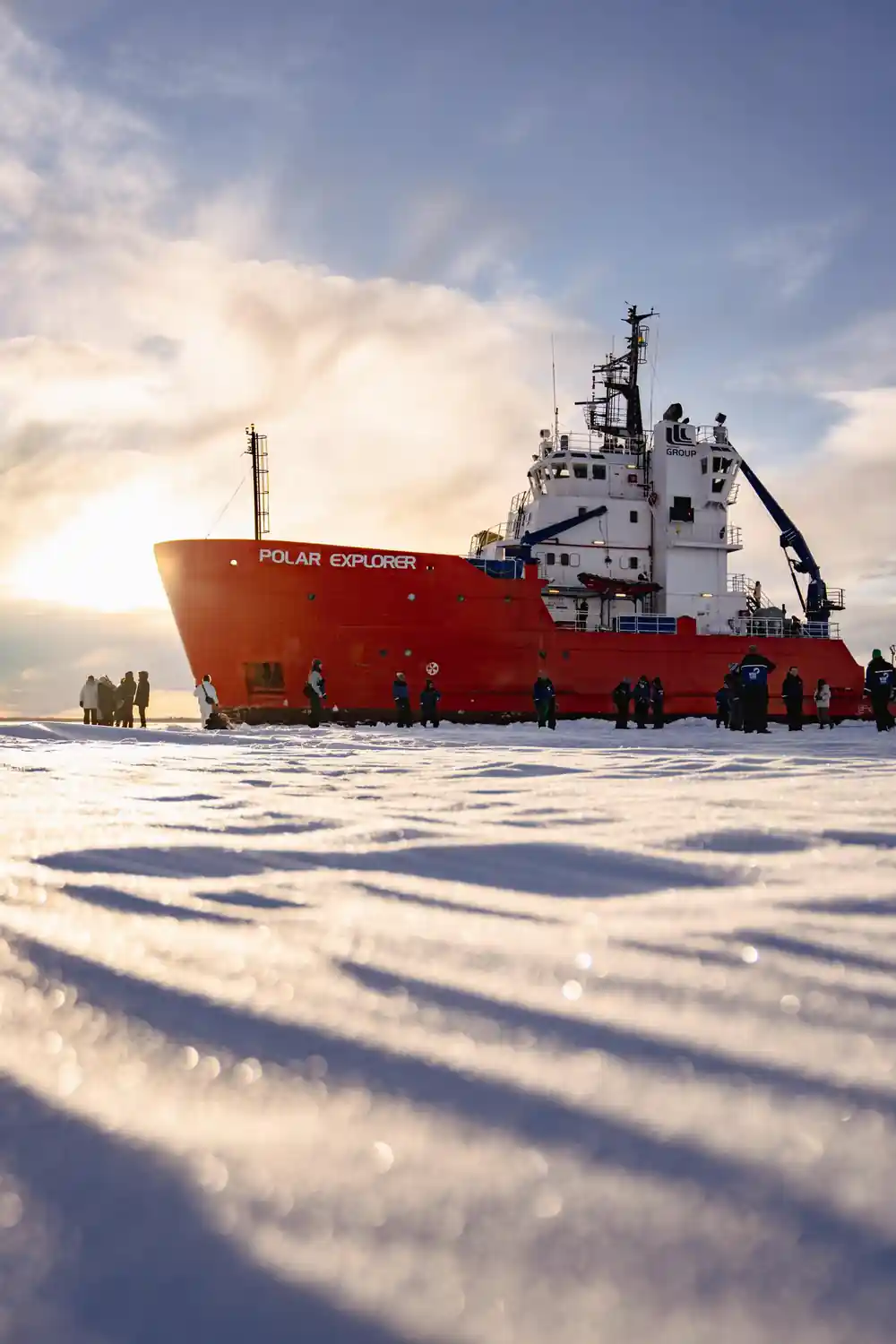
This is not the disaster it sounds like, and photographers deliberately come for it. Twilight over snow at this latitude is a strange even blue that lasts for hours, and the short window when the sun is up gives a low golden light that is unlike anything further south. But it is not daylight, and if your mental image of the day involves bright sun on white ice, December will not supply it.
The change afterwards is fast. By February there is meaningful daylight through the middle of the day, and by March the days are long enough that the trip runs comfortably in the light at both ends. That is a very different experience of the same cruise.
Low winter sun across the frozen bay
The cold, month by month
The nearest long-term record to the Finnish pickup point is Rovaniemi itself. January is the coldest month, averaging around minus seven by day and minus fifteen overnight. February is very slightly milder and March warms sharply, reaching around freezing by day while the nights stay well below.
None of these numbers should decide anything on their own. You will be in a heated coach, a heated ship and a sealed suit for most of the day, and the exposed parts are the open decks and the ice, where wind matters far more than the thermometer does. A calm minus twenty is more comfortable than a windy minus five, which is why the advice about a proper hat and real gloves is not a formality.
The one genuine cold-weather consideration is equipment rather than people: batteries fail quickly in this air, and a camera brought straight back inside will fog and then condense. Both are solvable and neither is obvious in advance.
The northern lights question
People booking anything in Lapland in winter ask whether they will see the aurora, and it is worth answering plainly here because this particular trip has an unusual relationship with it.
The cruise is a daytime activity. You leave in the morning and return in the evening, so the sailing itself is not an aurora outing and nothing about it is arranged around one. What it does do, in the deep part of the season, is put you outdoors in the dark at both ends of the day, a long way from town lighting, on a coach crossing empty country.
That is not a substitute for a proper aurora trip and should not be booked as one. But if conditions are good, a bus window facing north across a frozen bay is not the worst place to be, and keeping an eye on the northern sky asks nothing of you.
So which month
If you want the ice walk to be as close to certain as it can be, go in February or March. The sheet is at its most reliable, the light is back, and the ship is working thicker ice, which is more impressive rather than less.
If what you want is the Arctic at its most extreme, and you are prepared to treat the ice walk as a bonus, then late December and January deliver something the later months cannot: a day that never really becomes day, a horizon that stays blue, and a sun that appears briefly and low and then leaves again.
If you are coming to Lapland anyway and this is one item among several, book it early in your stay rather than late. It is weather dependent at the margins, the day is long, and having room to move it is worth more than any calendar preference. Free cancellation on the booking makes that straightforward.
Later in the season for the ice, midwinter for the strangeness
from US$375Live tour guide