In a nutshell
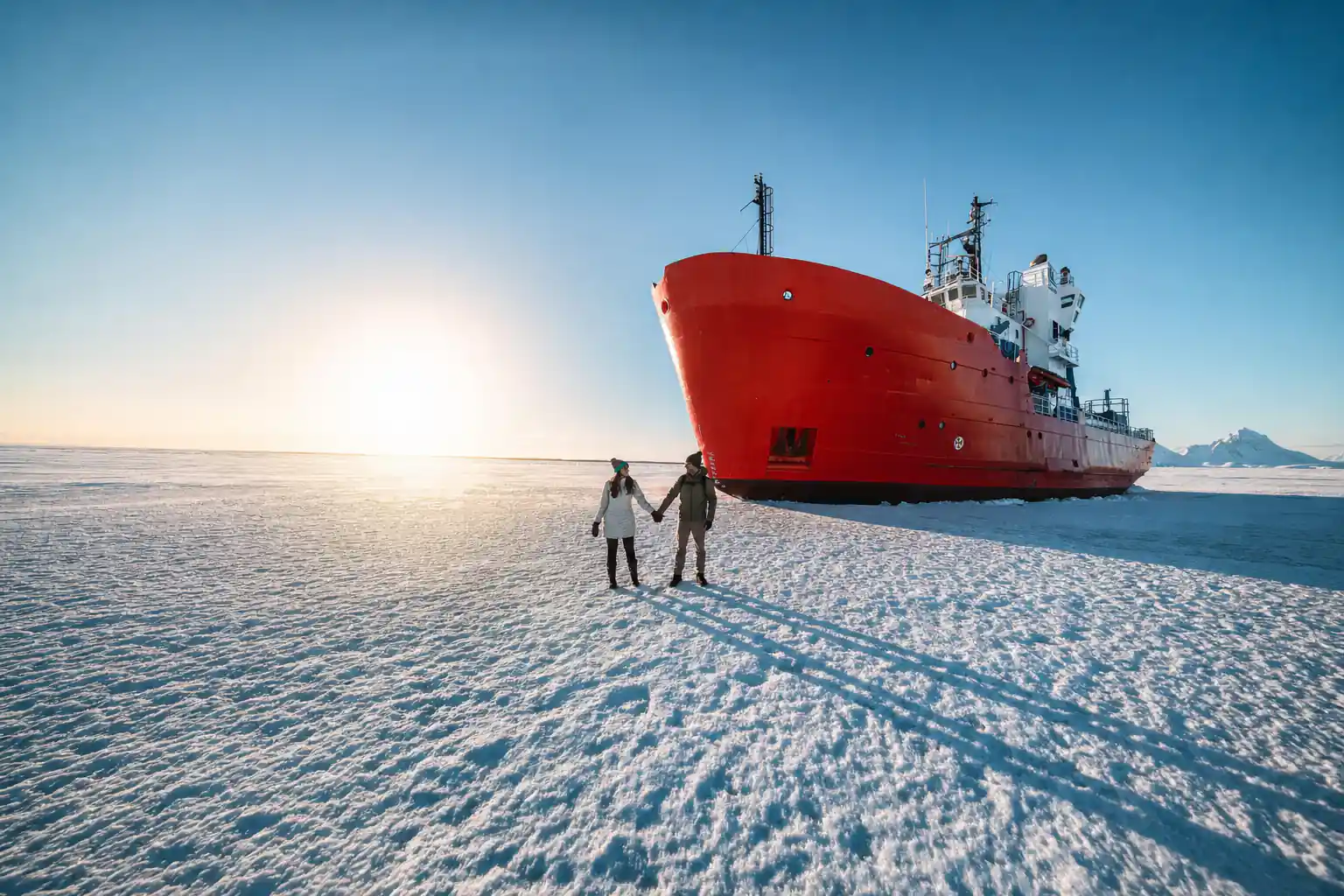
- Red steel hull, not a cruise ship with a strengthened bow bolted on.
- With an audio guide app running in sixteen languages as you go round.
- An eleven-minute film about icebreakers, shown on board.
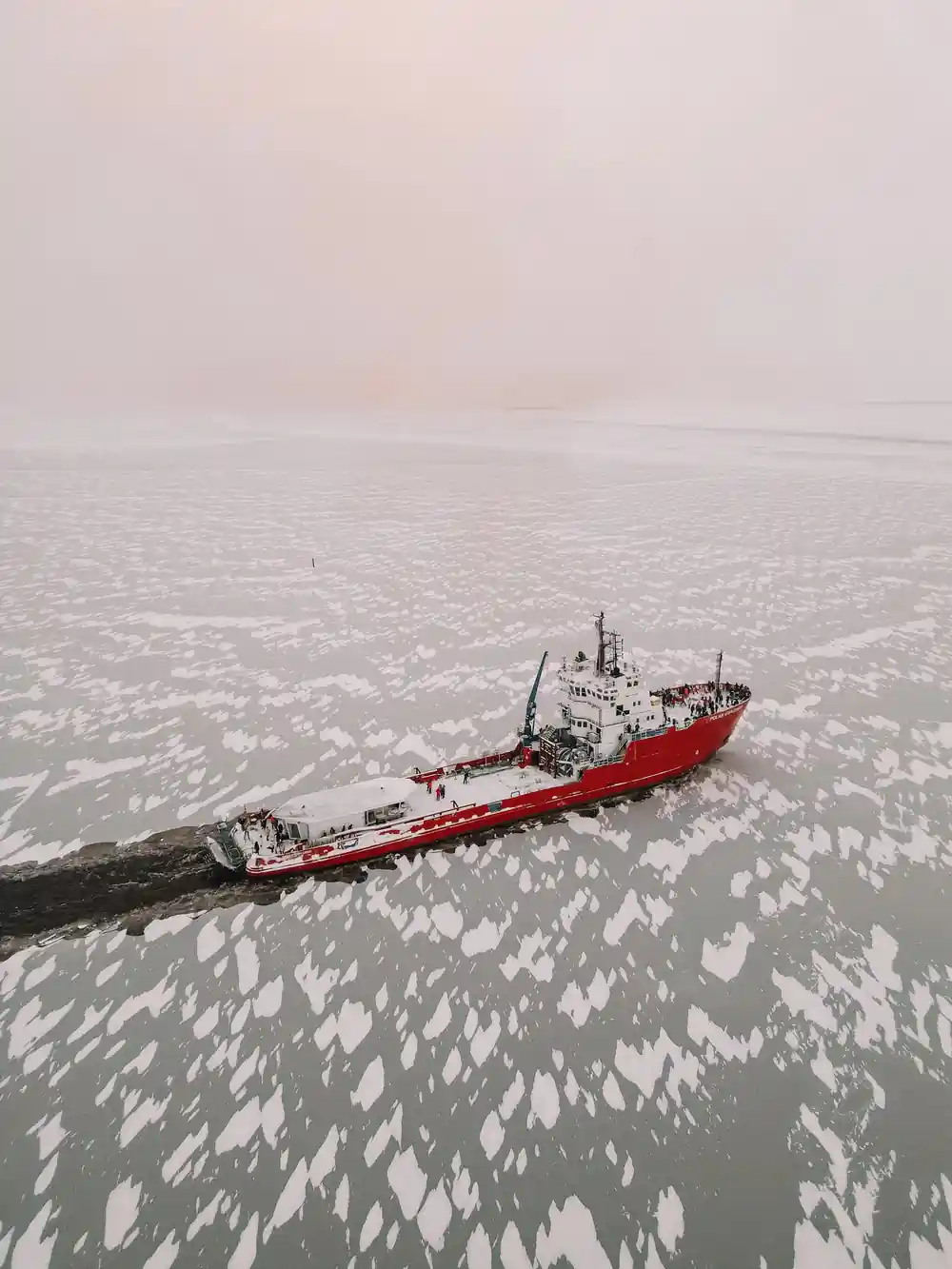
- The hull climbs onto the sheet and its own weight breaks the ice downwards.
Which ship this is
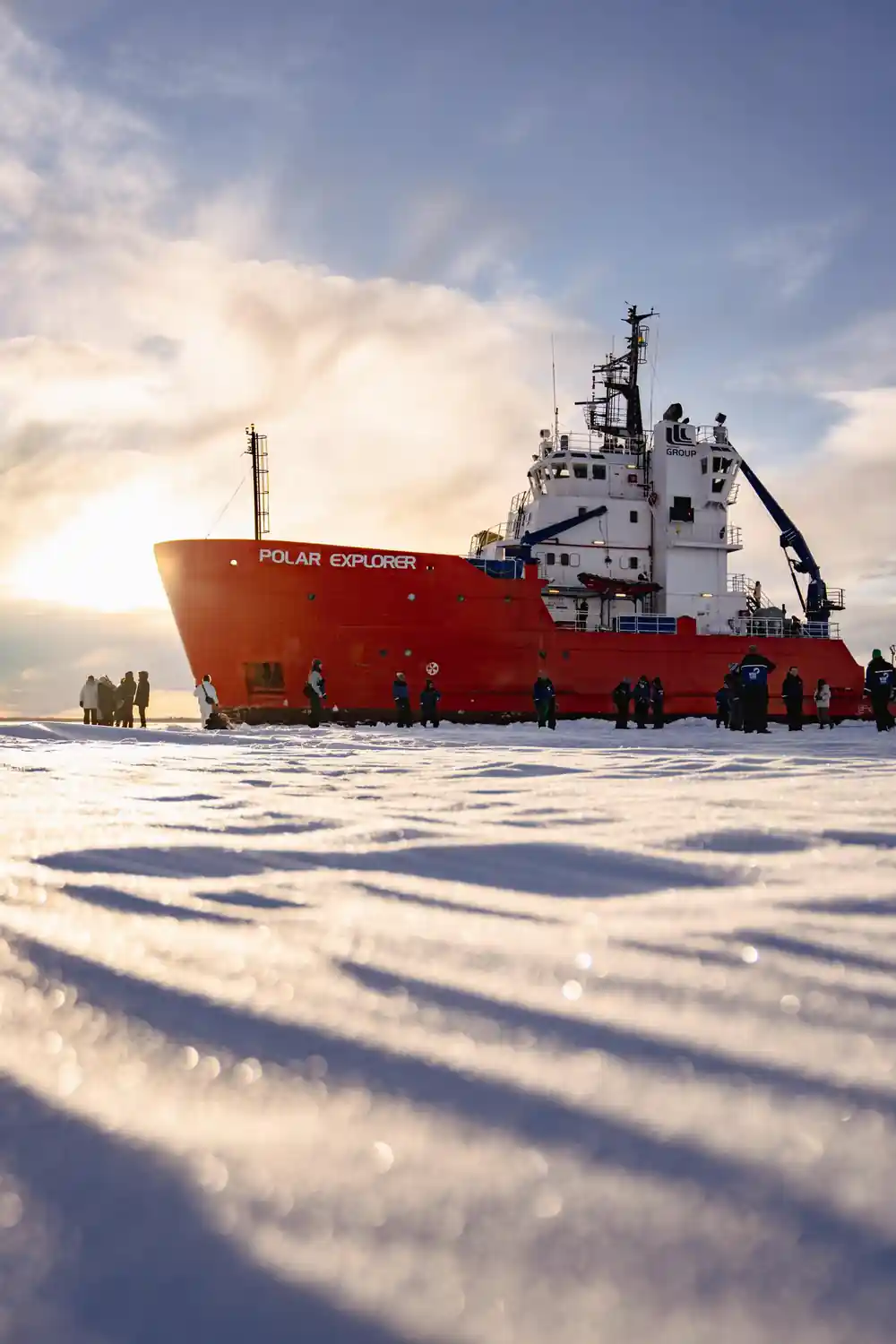
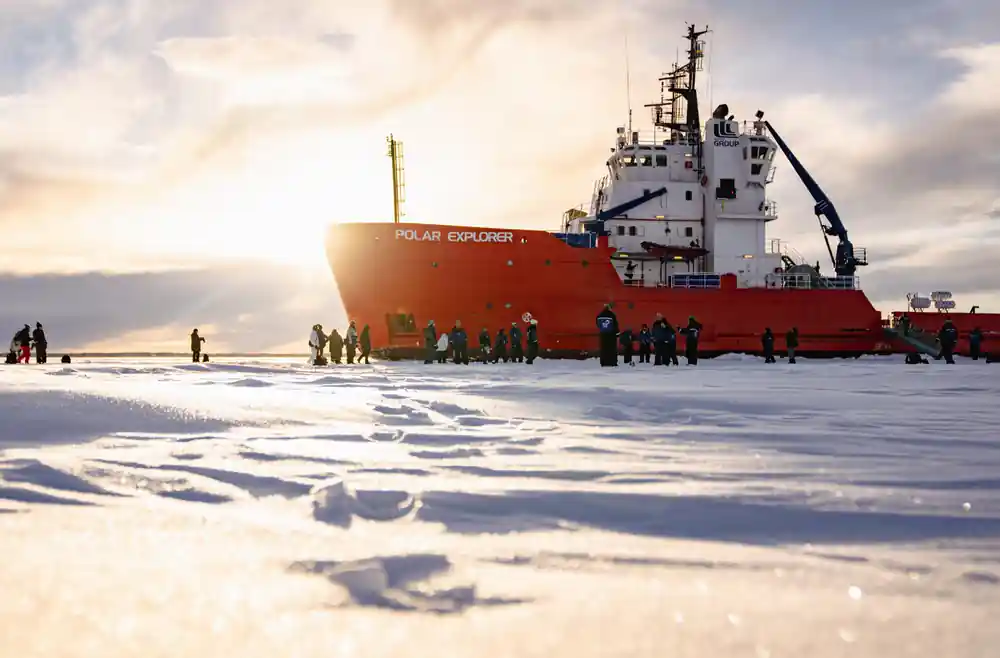
The booking does not name the vessel, which is oddly common on cruises of this kind and unhelpful if you want to know what you are getting. It is the Polar Explorer. The name is painted along the bow and appears in a good number of the operator's own photographs, and it is printed on the certificates handed out at the end of the day.
It matters because there is more than one icebreaker taking passengers on this coast, and they are not the same experience. Some are considerably smaller and run short harbour trips; some sail from Finnish ports rather than Swedish ones. Knowing which ship you have booked is the difference between reading about your cruise and reading about somebody else's.
This one is a working ship. The hull is heavy plate, the deck fittings are functional rather than decorative, and the interior is a ship's interior: painted steel, ladders between levels, doors with dogs on them. That is the appeal rather than a shortcoming.
The seven decks
Passengers get all seven, which is unusual. On most vessels carrying visitors a large part of the ship is crew-only by default, and here the tour is explicitly of the whole thing, with an audio guide app that runs in sixteen languages so you can go at your own pace rather than in a herd.
The bridge is the highlight for most people. It is a working bridge with a working watch on it, and standing at the front of it while the ship is actually breaking ice is an entirely different proposition from looking at one alongside. From up there you can see the sheet ahead, the crack running out from the bow, and the pieces turning over as the hull pushes past.
Below there is the theatre, which shows an eleven-minute film about icebreakers and is a genuinely good use of the time while the ship is repositioning. There is a cafeteria, where hot drinks are included and everything else is bought. And there are the working spaces, which is where a ship like this becomes interesting: the machinery is the reason it can do what it does, and it is not hidden.
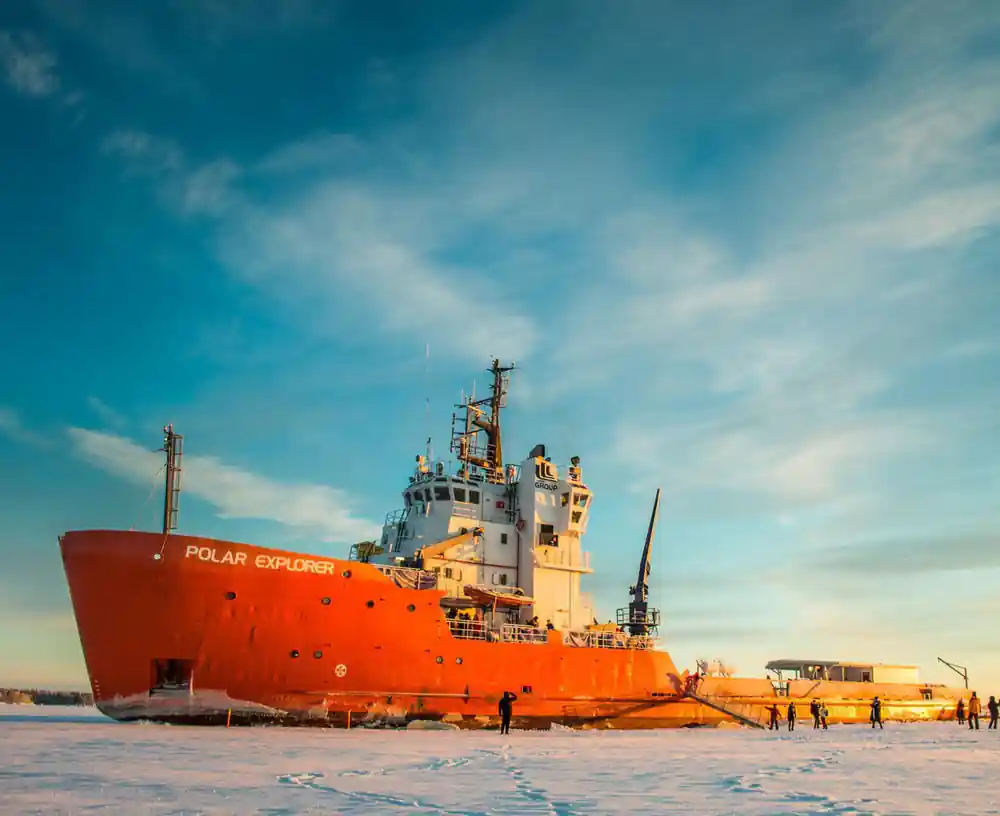
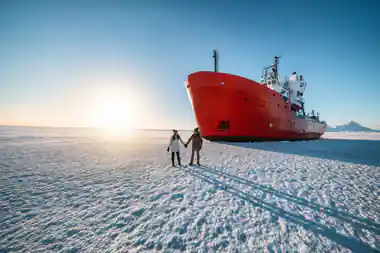
The red hull standing in flat sea ice
How it breaks ice
The intuition most people arrive with is that an icebreaker cuts, like a knife through a sheet. It does not. Ice is strong in compression and weak in bending, so trying to push through it edge-on is the hardest possible way to attack it.
What an icebreaker does instead is climb. The bow is shaped to ride up onto the ice rather than into it, and once the forward part of the hull is on top of the sheet, the ship's own weight bends the ice downwards until it fails. Then the broken pieces are pushed aside and under, the hull slides forward, and the cycle repeats.
That is why the sound is a rhythm rather than a roar. From the accommodation it arrives as a groan through the steel, spaced out, with quiet in between. In thicker ice the ship may back up and charge, which is exactly what it sounds like and is a normal working technique rather than a sign of difficulty.
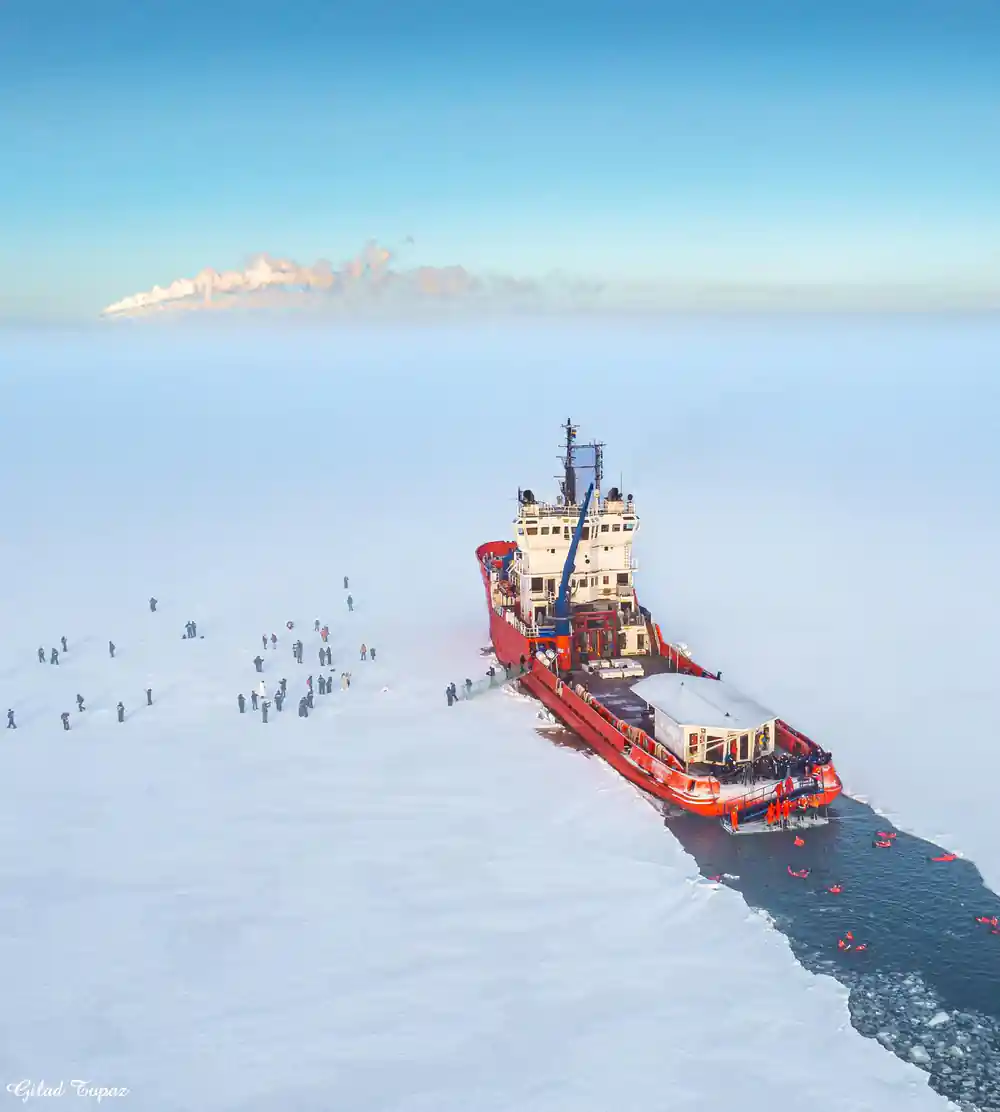
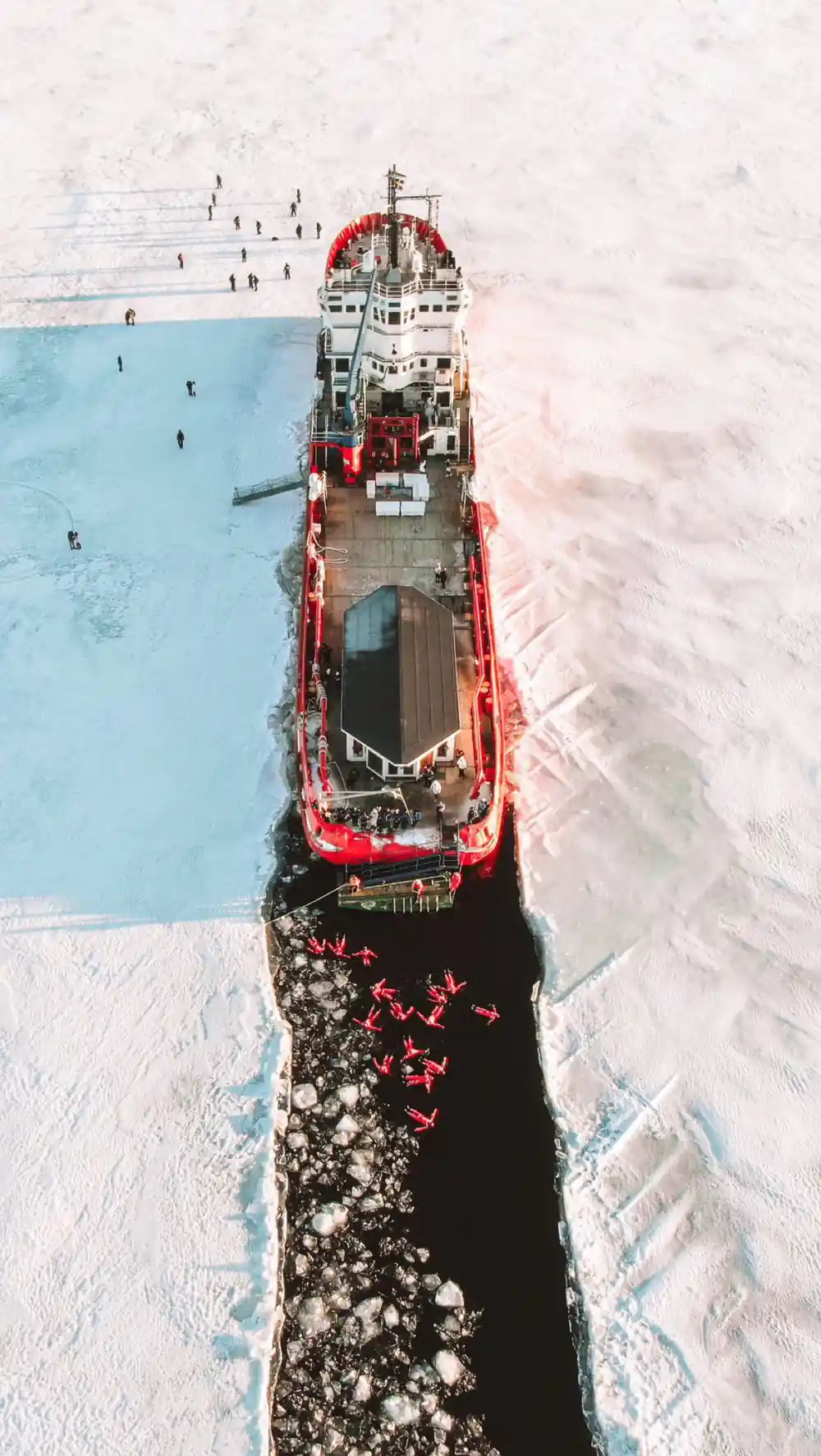
It is also why the channel behind the ship looks the way it does from the air: not a clean cut but a broad lane of tumbled blocks, refreezing at the edges, with the sheet intact on either side.
What the ship is for the rest of the year
A passenger icebreaker is an unusual object because the job it was built for and the job it now does are not the same. Ships of this type exist to keep commercial ports open through a Baltic winter: escorting cargo vessels, freeing ones that have got stuck, and maintaining channels that would otherwise close for months.
That heritage is visible everywhere on board once you know to look for it. The deck space is working space. The winches and the towing gear are the real thing rather than props. The accommodation is built for a crew doing a long cold job rather than for guests, which is why the interior feels like a ship and not like a hotel.
It also explains the ice performance. A vessel designed to break a channel for a loaded cargo ship has a great deal more capability than a day cruise needs, which is the reason it can stop in the middle of a frozen bay, hold position while several dozen people get into the water beside it, and then break its way back out without any drama at all.
7 decks
All of them open to passengers, with an audio guide app in sixteen languages. On most ships carrying visitors, most of the vessel is crew-only.
Being on board while it works
The open decks are where most people spend the first part of the sailing, and they are cold. There is nothing between you and the wind, the ship is moving, and the air over a frozen sea has nothing in it to hold heat. Layers and a proper hat matter more here than they do for the swim.
Once the ship stops, the character of the day changes completely. The engines come down, the noise stops, and the silence over an ice field is total in a way that is difficult to describe and slightly unnerving. That is when the boarding arrangements are made for going out onto the ice and into the water.
The return sailing is the quiet part of the day and the best time to use the ship properly: the theatre, the cafeteria, the decks you skipped on the way out. Most people are tired, warm and pleased with themselves by then, which is the correct state in which to look at machinery.
A working icebreaker with its bridge open
from US$375Live tour guide