In a nutshell
- A full immersion suit, issued on board and worn over what you already have on.
- The cold that gets people is standing still outside, not the half hour in the water.
- A passport or identity card is required, and the ship sails from another country.
- Cameras and phones lose charge fast and fog when brought back inside.
The mistake almost everybody makes
People preparing for this day think about the swim, because the swim is the striking part. So they arrive dressed for immersion in freezing water, which is the one part of the day that has been solved for them.
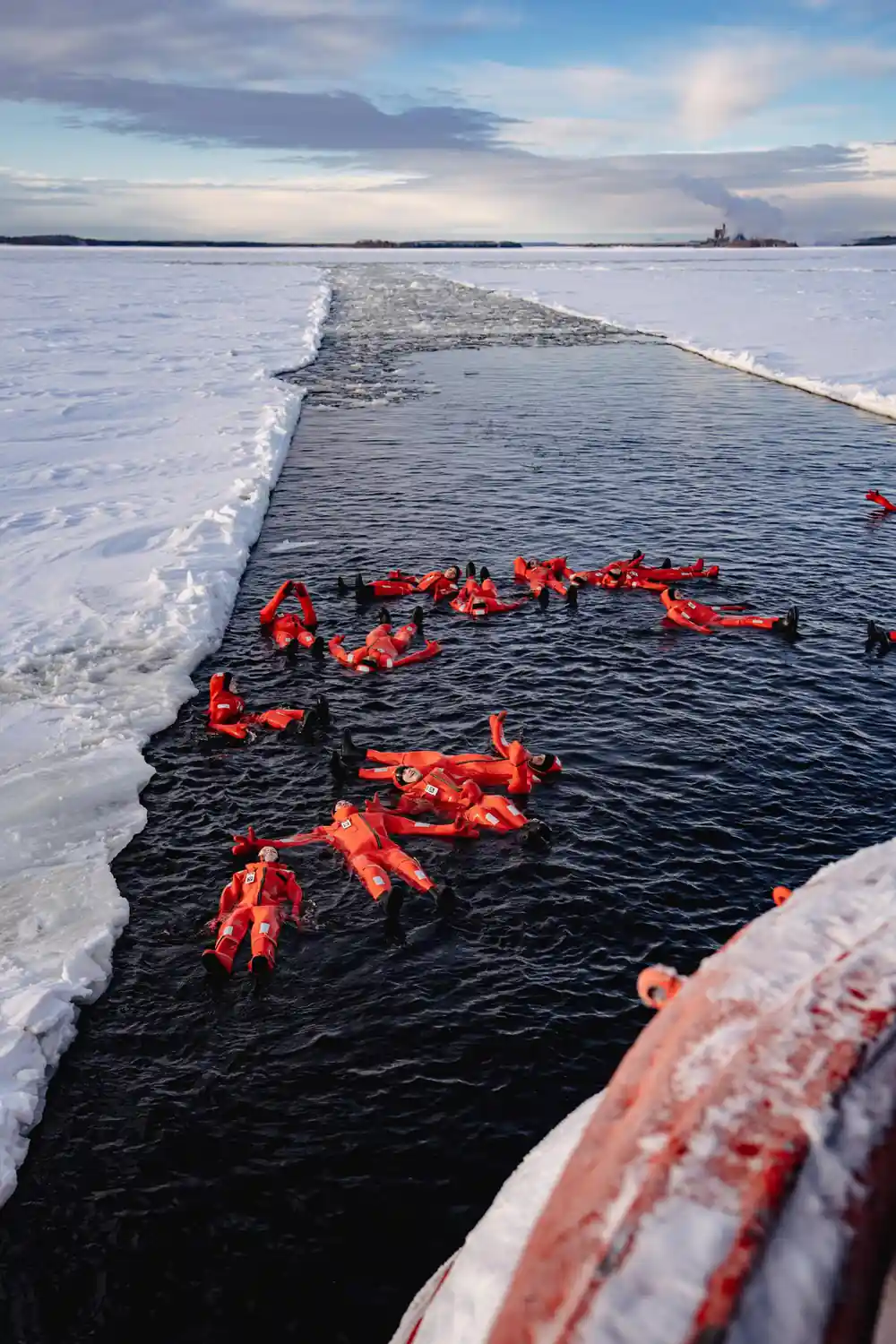
The survival suit is provided. It is a sealed one-piece immersion suit and it goes on over your ordinary clothes. Whatever you are wearing when you get on the ship is what you will be wearing inside it, and the suit is what keeps the water out and the air in.
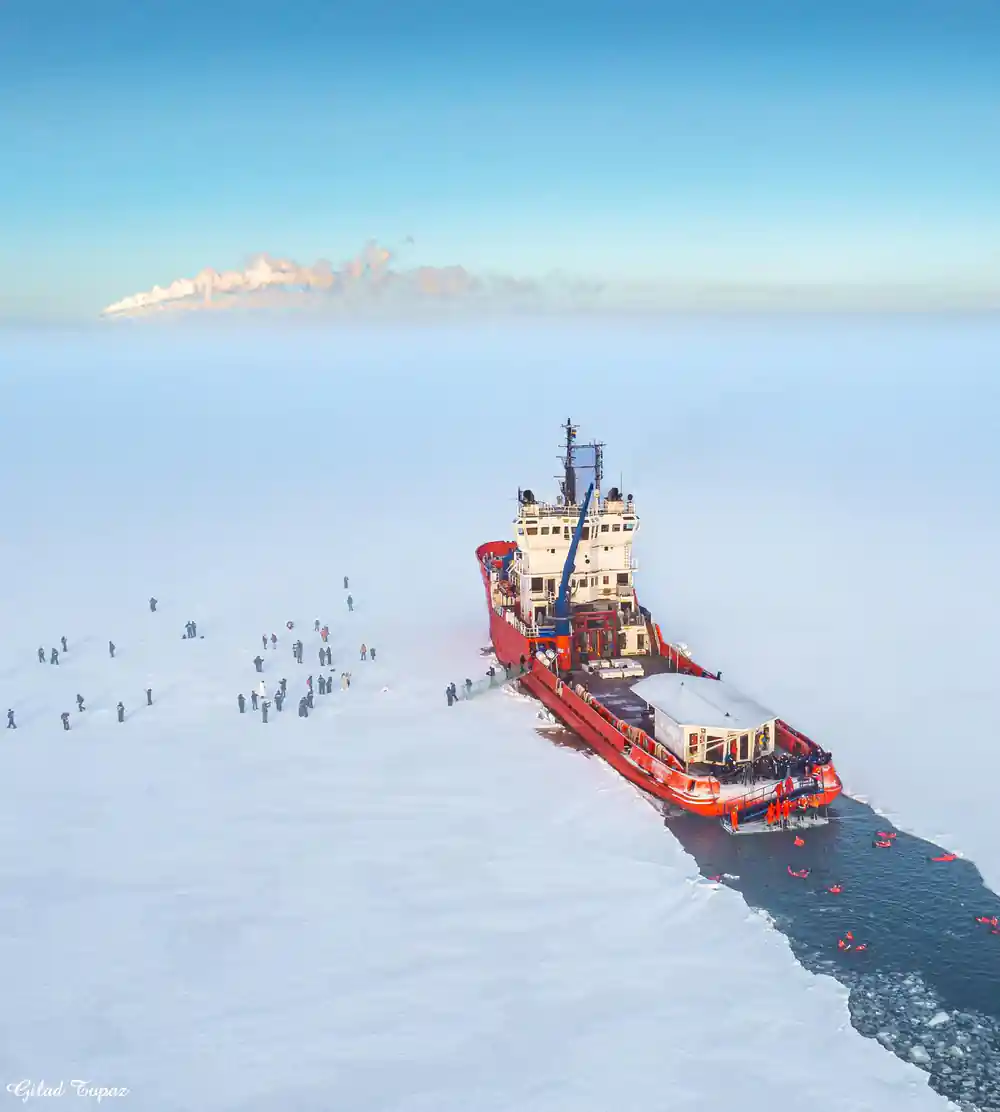
So the clothing question is not about the water at all. It is about the several hours you spend on an open steel deck in the Arctic, moving slowly or standing still, while a ship pushes through ice. That is where the cold actually reaches people, and it is the part nobody prepares for.
What to wear on the ship
Layers, and a windproof outer layer above all. Air over a frozen sea is dry and clean and takes heat away efficiently, and a ship under way makes its own wind on top of whatever is already blowing. A very warm jacket that lets wind through will disappoint you.
A real hat rather than a fashionable one, covering the ears. Gloves that you can actually operate a camera in are a compromise worth thinking about in advance, because the alternative is repeatedly taking gloves off in air well below freezing. Mittens are warmer than gloves; a thin liner glove underneath is the usual answer.
Boots that handle packed snow and a steel deck. Ordinary winter boots are fine; smooth-soled fashion boots are not, and neither is anything you mind getting wet at the edges. Thick socks, and not so thick that they compress inside the boot, which makes feet colder rather than warmer.
Indoors the ship is heated and you will want to take a layer off, which is another argument for layers rather than one enormous coat.
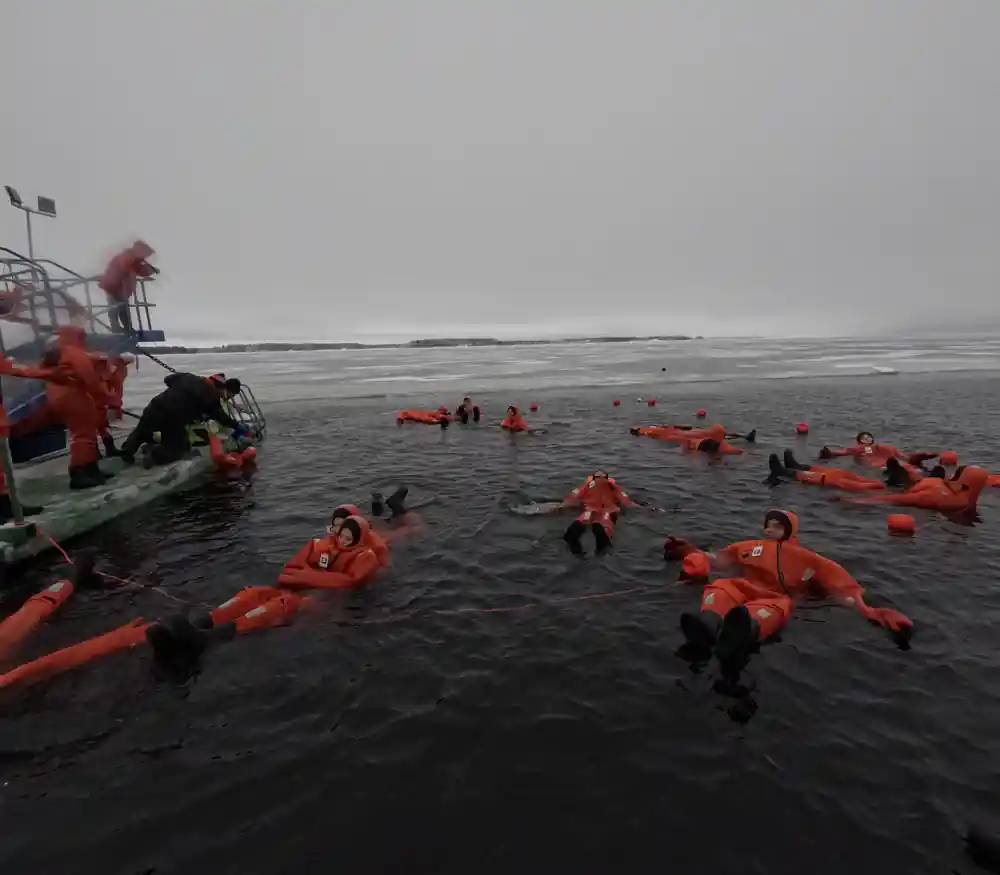
Survival suits on the rack before the swim
What goes under the suit
Whatever you were already wearing, minus the outermost bulk. The suit has to close properly around the face and at the wrists, so an enormous hood or a very thick jacket collar can get in the way; the crew fitting you will tell you what to shed.
Do not add anything special for the water. There is no advantage to a swimming costume under your clothes, because you are not going to get wet, and there is no point in extra insulation, because the suit provides it. The most common regret is the opposite: people who removed too much and then had to stand about on the ice waiting their turn.
Anything in your pockets should come out before you are sealed in. It will be difficult to retrieve, and a phone that goes into cold water with you inside a suit is not protected by the suit.
In your bag
A passport or identity card, which the operator requires. The ship sails from a different country to the one you set off from, and although there is no routine border check between two Schengen states, being the passenger without documents is a poor plan.
A card for the cafeteria. Meals are not included and are bought on board in Swedish krona, and Sweden runs almost entirely on cards.
Sunglasses, which sound absurd for a trip made in near-darkness and are not. In the second half of the season the sun is low, the sea is white, and glare off snow at a shallow angle is genuinely painful. In midwinter you can leave them behind.
Something to eat before you go, since the timing of the cafeteria belongs to the ship rather than to your appetite.
A small bag you are happy to leave somewhere while you are in a survival suit. There is nowhere to carry anything once you are sealed in, and the suit has no pockets you can reach, so whatever you take out onto the ice has to be either in your hands or left behind on the ship.
Cameras in cold air
This is worth its own paragraph because it catches almost everyone. Batteries lose capacity sharply in cold air, and a battery that reads full at the hotel can be flat within an hour on deck. Carry a spare somewhere warm, against your body rather than in an outer pocket, and swap them rather than trying to nurse one.
The second problem is condensation. A cold camera brought straight into a heated cabin will fog immediately, and moisture will condense inside the lens and sometimes inside the body. The fix is to let it warm up slowly: put it in a bag before you go inside, and let it come up to temperature in there rather than in open air.
The third is simply handling. Touchscreens do not respond to thick gloves, small buttons are hard to find with cold fingers, and dropping something on a steel deck or through a crack in the ice is permanent. Wrist straps earn their keep here.
None of this is a reason to leave the camera behind. It is a reason to bring two batteries and a plastic bag.
The suit is included. Bring the hat
from US$375Live tour guide